
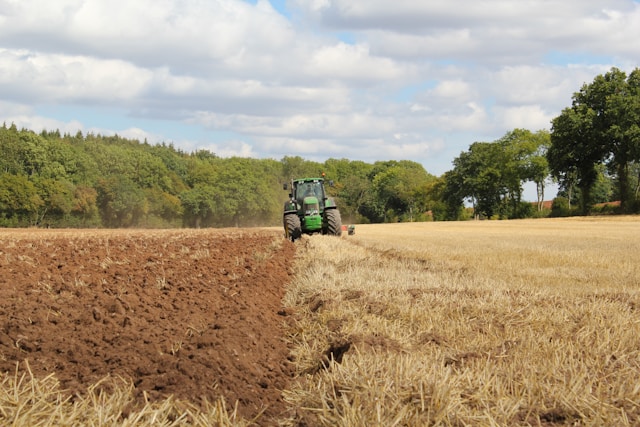
For decades, the story of modern agriculture has been one of extraction. We have viewed the soil as a static medium—a mere holding tank for seeds and synthetic chemicals designed to produce the highest possible yield in the shortest amount of time. However, this “Green Revolution” approach has come at a staggering cost. Across the globe, topsoil is eroding, biodiversity is plummeting, and the nutrient density of our food is in decline.
Enter the soil revolution. Regenerative agriculture is not just a buzzword; it is a fundamental shift in how we relate to the land. Unlike sustainable agriculture, which seeks to maintain a degraded status quo, regenerative farming aims to actively restore and renew the ecosystem. By focusing on the health of the soil, we are discovering that we can heal the planet, stabilize the climate, and secure our food future simultaneously.
Understanding the Living Web Beneath Our Feet
To understand why regenerative agriculture is the future, we must first understand what soil actually is. Many people mistake soil for dirt, but the two are worlds apart. Dirt is dead; soil is a thriving, breathing ecosystem. In a single teaspoon of healthy soil, there are more microorganisms than there are people on Earth.
This complex web of bacteria, fungi, protozoa, and nematodes forms a symbiotic relationship with plants. Plants provide carbon-based sugars through their roots, and in exchange, the soil biology mines minerals and provides water to the plant. When we use heavy tilling and synthetic fertilizers, we disrupt this delicate “underground economy.” Regenerative practices seek to put the biology back in charge, creating a self-sustaining loop that requires fewer outside inputs.
The Five Core Pillars of Regenerative Practice
The transition to regenerative farming isn’t about following a rigid set of rules; it’s about adhering to biological principles that mimic nature. Farmers moving toward the future generally focus on five main strategies:
1. Minimizing Soil Disturbance
Traditional plowing and tilling might prepare a clean seedbed, but it acts like an earthquake to the soil’s infrastructure. It breaks apart fungal networks and exposes carbon to the air, where it turns into CO2. Regenerative farmers move toward “no-till” or “low-till” systems, keeping the soil structure intact and the carbon where it belongs—underground.
2. Maintaining Living Roots Year-Round
Nature rarely leaves soil bare. In a forest or a prairie, there are always roots in the ground. Living roots pump liquid carbon into the soil, feeding the microbial community. By using cover crops during the “off-season,” farmers ensure that the biological engine of the farm never shuts down, even in winter.
3. Increasing Biodiversity
Monoculture—growing mile after mile of a single crop—is a magnet for pests and diseases. Regenerative systems embrace variety. This includes complex crop rotations, intercropping (planting two or more crops together), and planting pollinator strips. Diverse plant life leads to diverse soil life, which creates a more resilient farm.
4. Keeping the Soil Covered
Armor is essential for soil health. Whether it is living plants or a thick layer of crop residue (mulch), covering the soil protects it from the erosive power of wind and rain. It also regulates soil temperature, keeping it cool in the summer and warm in the winter, which is vital for the survival of beneficial microbes.
5. Integrating Livestock
In nature, grazing animals are a vital part of the cycle. Their manure provides natural fertilizer, and their grazing action stimulates plant growth. Regenerative agriculture often brings cattle, sheep, or poultry back onto the land in a managed way, using “holistic grazing” patterns that improve soil fertility without overstressing the plants.
Healing the Climate Through Carbon Sequestration
One of the most exciting aspects of the soil revolution is its potential to mitigate climate change. Agriculture is often blamed for high emissions, but regenerative farming turns the farm into a carbon sink. Through the process of photosynthesis, plants pull carbon dioxide out of the atmosphere and turn it into carbohydrates.
When the soil is healthy and undisturbed, much of that carbon is stored deep underground in the form of organic matter. This isn’t just a theory; regenerative farms have shown the ability to increase soil organic matter significantly in just a few years. If scaled globally, this “carbon farming” could play a massive role in drawing down atmospheric CO2, making farmers the frontline heroes of environmental restoration.
Water Security and the “Sponge Effect”
As the world faces more frequent droughts and intense flooding, water management has become a matter of survival. Regenerative agriculture offers a natural solution known as the “sponge effect.”
Healthy soil, rich in organic matter and fungal networks, acts like a massive sponge. For every 1% increase in soil organic matter, an acre of land can hold an additional 20,000 to 25,000 gallons of water. This means that during heavy rains, the water soaks in rather than running off and causing erosion. During droughts, the crops have a deep reservoir of moisture to draw from. This resilience is what will allow the future of farming to survive an increasingly volatile climate.
The Economic Case for Farmers
Critics often argue that regenerative farming is a luxury that “can’t feed the world” or is too expensive for farmers to adopt. The reality on the ground is proving the opposite. While conventional farming relies on expensive, fossil-fuel-based inputs like synthetic nitrogen, pesticides, and herbicides, regenerative farming reduces the need for these products.
By lowering their input costs, farmers can often see higher profit margins, even if their total yield is slightly lower in the early transition years. Furthermore, regenerative systems produce more nutrient-dense food. As consumers become more health-conscious, a market is growing for “regeneratively grown” products, often fetching a premium price. The future of farming isn’t just about how much we grow, but the quality of what we grow and the stability of the farmer’s livelihood.
Restoring Human Health Through Soil Health
There is an old saying: “Healthy soil, healthy plants, healthy people.” Modern medicine is beginning to recognize the link between the soil microbiome and the human microbiome. Plants grown in biologically active soil have access to a wider range of micronutrients and phytonutrients than those grown in “dead” soil supplemented with only Nitrogen, Phosphorus, and Potassium (NPK).
By focusing on regenerative agriculture, we are effectively investing in a long-term public health strategy. Reducing the chemical load on our food and increasing its mineral content can help combat the rise of diet-related chronic illnesses. The soil revolution is, in many ways, a nutritional revolution.
The Path Forward: Scaling the Revolution
Transitioning the global food system is no small task. It requires a shift in policy, a redesign of supply chains, and a willingness to move away from the “bigger is better” mindset of the last century. However, the momentum is building. From small-scale market gardeners to massive multi-thousand-acre operations, farmers are proving that regenerative principles work across all climates and scales.
Technology is also playing a role, with new tools for monitoring soil carbon and microbial life allowing farmers to see the real-time impact of their management decisions. As the data piles up, the conclusion becomes unavoidable: we cannot continue to farm against nature. We must learn to farm with it.
Conclusion
The soil revolution represents a homecoming. It is a return to the wisdom of ecological systems, powered by modern scientific understanding. By prioritizing the life beneath our feet, we address some of the most pressing challenges of our time—from food security and water scarcity to climate change and human health.
The future of farming isn’t found in a laboratory or a chemical factory; it is found in the dirt, the roots, and the microscopic wonders that make life on Earth possible. As we move forward, the success of our civilization will likely depend on how well we treat the thin, fragile layer of topsoil that sustains us all.

