
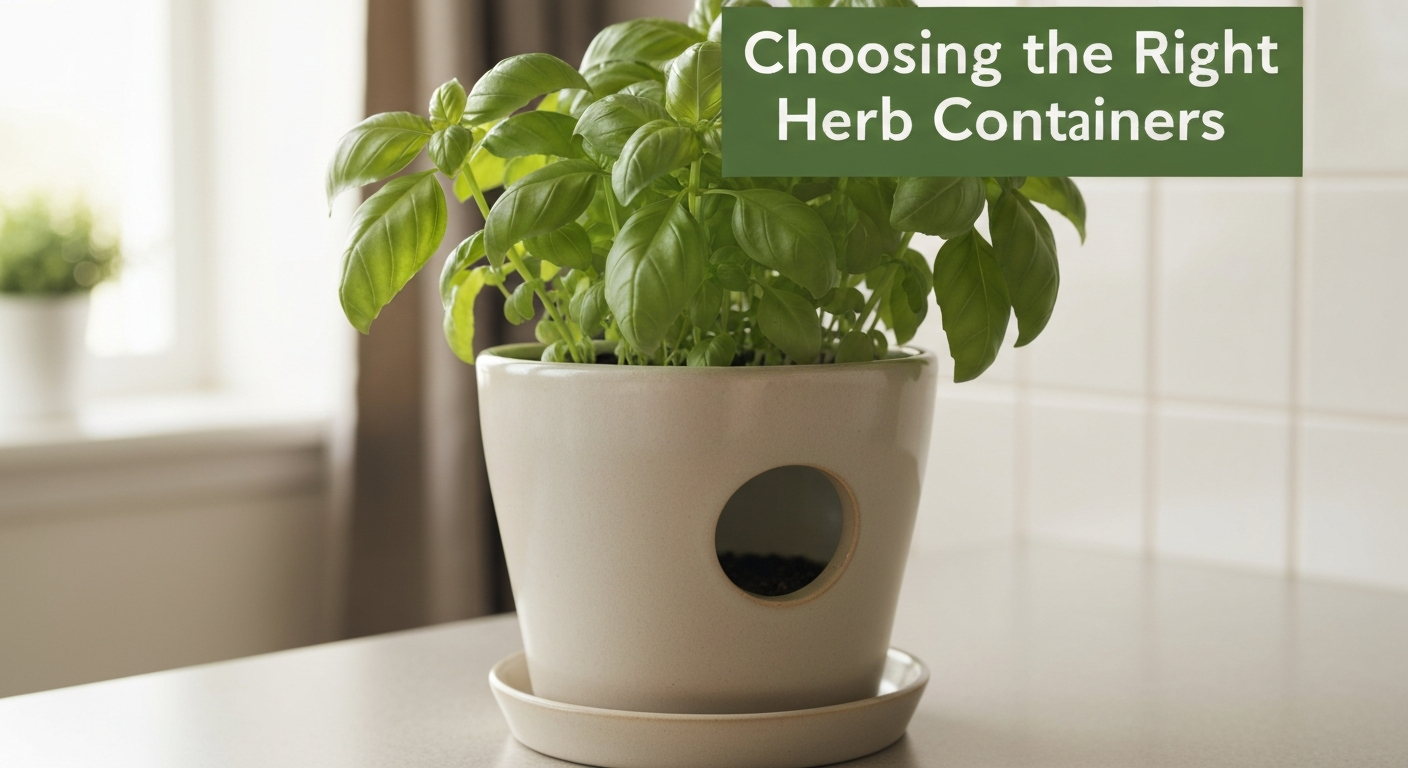
We’ve all been there. You’re walking down the aisle of a home goods store, and you spot it: a tiny, adorable pot that looks like a teacup or a vintage tin. It matches your kitchen backsplash perfectly. You imagine a lush basil plant spilling over the edges, brightening up your morning coffee routine. You buy it, plant your herb, and two weeks later, the plant is dead.
I made this mistake more times than I’d like to admit. The truth is, herbs don’t care about your backsplash. They care about their roots. If the pot doesn’t do its job, the plant above the soil will never thrive, no matter how much light or water you give it.
My name is wissam saddique. I got into indoor container herb gardening after trying to keep a few basic herbs alive in a small apartment and realizing how little straightforward information existed for people working with limited space. What started as a simple attempt to grow basil on a windowsill gradually became a more deliberate process of testing different containers, light setups, and routines.
Through a lot of trial and error (and a few composted rosemary plants), I learned that choosing a container isn’t about aesthetics—it’s about engineering a tiny ecosystem. Here is what you need to know before you buy.
The Golden Rule: Drainage is Non-Negotiable
If you take only one thing away from this article, let it be this: If a pot does not have holes in the bottom, do not plant directly into it.
Herbs hate “wet feet.” When water sits at the bottom of a pot with nowhere to go, it fills the air pockets in the soil. Without air, the roots suffocate and rot. In my early days, I tried to “trick” the system by putting rocks at the bottom of a hole-less pot, thinking the water would sit in the rocks. It doesn’t work. The soil just acts like a sponge and pulls the water back up, rotting the roots anyway.
I learned to look for pots with at least one good-sized drainage hole. If I absolutely fall in love with a decorative pot that has no holes, I use it as a “cachepot” (a cover). I plant the herb in a cheap plastic nursery pot that does have holes, and then slip that plastic pot inside the decorative one.
Sizing Matters: Depth vs. Width
One of the biggest shocks for new indoor gardeners is how much root space a “small” herb actually needs. A basil plant might look small when you buy it, but its roots want to dig deep. If the pot is too shallow, the plant will stunt—it will stay small, produce fewer leaves, and flower (bolt) too quickly because it feels stressed.
Here is the breakdown of what size pots I’ve found actually work for common herbs.
The 6-Inch Rule
For almost all standard kitchen herbs—Basil, Parsley, Cilantro, and Thyme—you need a pot that is at least 6 inches deep and 6 inches wide.
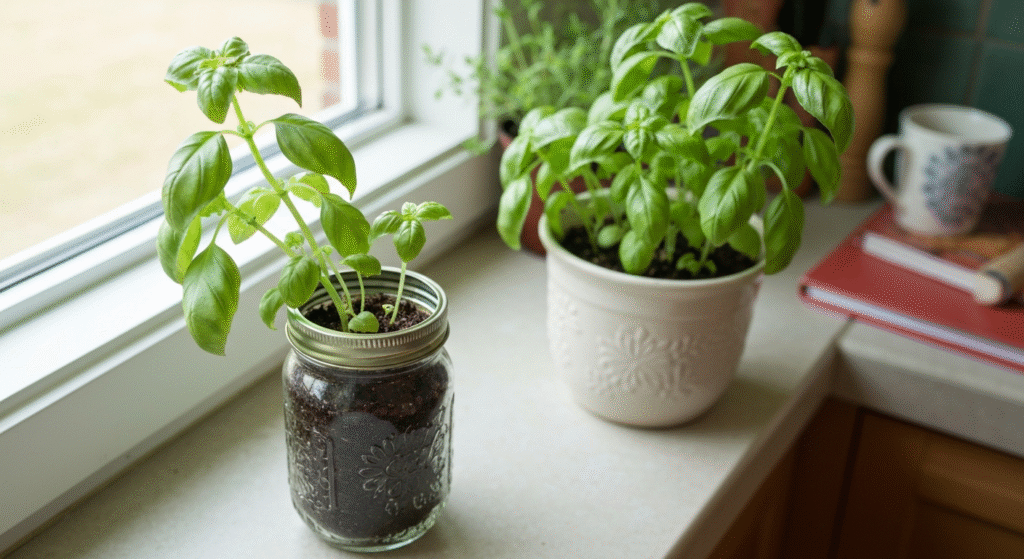
I once tried growing basil in small 4-inch mason jars. It was a disaster. The plants grew about three inches tall, turned yellow, and stopped producing new leaves. As soon as I moved them to a 6-inch deep pot, the difference was immediate. The extra soil volume holds moisture longer and gives the roots the leverage they need to support a bushy plant.
The Exception: Mint
Mint is the bully of the herb world. It doesn’t just grow down; it grows out. It sends out horizontal runners (underground stems) to take over as much space as possible.
For mint, a standard 6-inch pot often isn’t enough. I recommend a pot that is 8 to 10 inches wide. It doesn’t need to be incredibly deep, but it needs surface area. If you put mint in a tiny pot, it will become “root bound” (where roots circle the pot endlessly) within a month, and you’ll constantly be fighting to keep it watered.
| Herb Type | Minimum Depth | Minimum Width | Why? |
| Basil | 6-8 inches | 6 inches | Needs depth to support large leaf mass. |
| Parsley | 6-8 inches | 6 inches | Long taproot needs vertical space. |
| Cilantro | 8 inches | 6 inches | Finicky deep roots; hates being crowded. |
| Mint | 6 inches | 8-10 inches | Spreads horizontally; needs width. |
| Thyme/Oregano | 6 inches | 6 inches | Shallow root systems, but needs drainage. |
Material World: Why I Switched to Glazed Ceramic
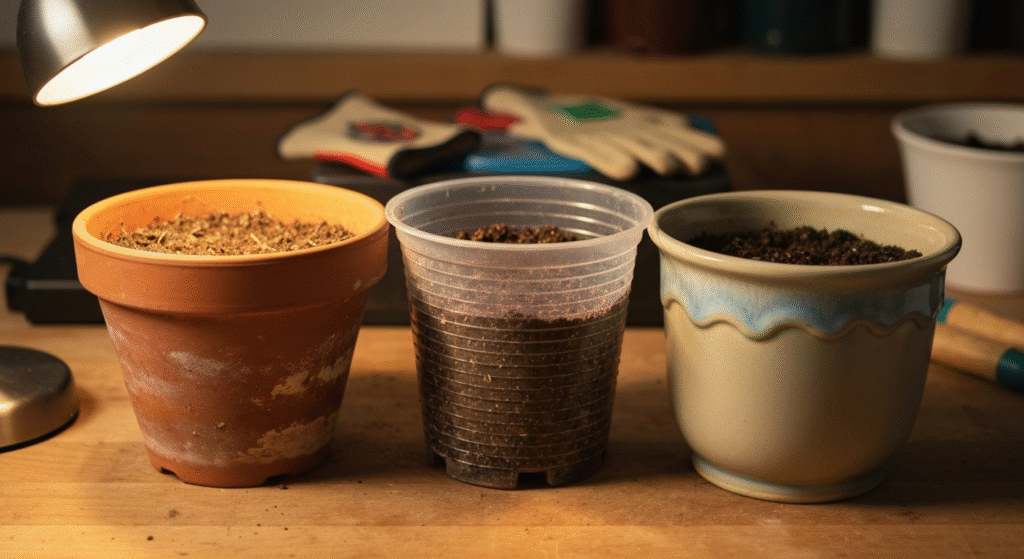
Go to any garden center, and you will see three main options: Terracotta (clay), Plastic, and Glazed Ceramic. I have used all three extensively on my countertops.
The Problem with Terracotta
Terracotta pots are the orange, unglazed clay pots. They are classic and cheap. However, for indoor herbs on a sunny windowsill, I stopped using them.
Terracotta is porous, meaning it breathes. This is great for preventing rot outdoors, but indoors, the dry air of an apartment combined with the porous clay wicks moisture out of the soil incredibly fast. In the summer, I found myself having to water my terracotta pots twice a day just to keep the basil from wilting. It was too much maintenance.
The Issue with Plastic
Plastic pots are lightweight and cheap. They hold water well, which is a plus. However, on a south-facing windowsill that gets hot sun, thin plastic can heat up the soil too much, “cooking” the tender roots. They also tend to be very light. Once my basil got tall, the plastic pots became top-heavy and would tip over easily if I bumped the table.
Why I Prefer Glazed Ceramic
I now use primarily glazed ceramic pots. They are the “Goldilocks” solution for me.
- Moisture Retention: The glaze seals the clay, so water doesn’t evaporate through the walls. This keeps the soil moist longer than terracotta.
- Weight: They are heavy enough that a large rosemary bush won’t tip them over.
- Temperature: The thick walls provide good insulation against the hot sun.
They cost a bit more—usually around $8-12 for a decent one—but they save me so much time on watering and cleaning up tipped-over dirt.
The Drip Tray Dilemma
If you are growing on a countertop (especially wood or laminate), you need to protect the surface. Water will leak out. That is the point of drainage, but you don’t want it ruining your furniture.
Do not rely on those flat cork mats. They soak up water and hold it against the table, which causes mold and water rings. I always use a deep, glazed saucer or a plastic drip tray under every pot.
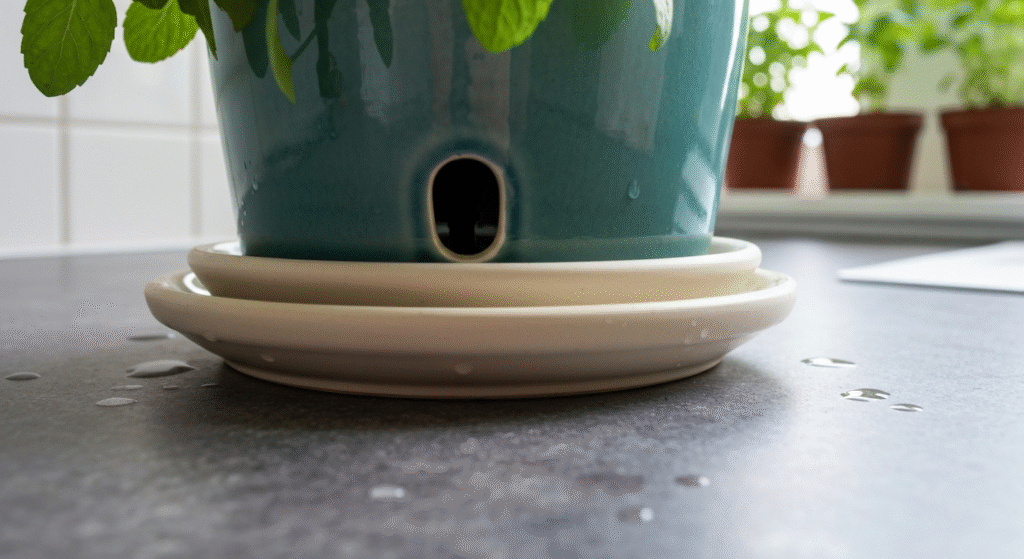
I usually pour out the excess water in the saucer about 30 minutes after watering. This ensures the plant isn’t sucking the waste water back up, which keeps the roots fresh.
Frequently Asked Questions
1. Can I plant multiple herbs in one big pot?
Yes, but be careful. You can plant herbs with similar water needs together (like Thyme, Rosemary, and Oregano). Do not plant Mint with anything else—it will strangle the other plants. Also, avoid mixing water-lovers (Basil) with dry-lovers (Rosemary), as one will always be unhappy.
2. Are self-watering pots good for beginners?
I haven’t tried self-watering pots extensively yet, but they can be tricky for herbs that like to dry out slightly, like thyme. They work well for basil, which loves consistent moisture, but they can lead to root rot if the reservoir stays full constantly. I prefer manual watering so I can check the soil dampness myself.
3. My pot has only one hole, is that enough?
Usually, yes. As long as the hole is roughly the size of a dime or larger, it should drain fine. If you notice water taking more than 15 seconds to start dripping out after you water, the hole might be clogged or too small.
4. Do I need to wash old pots before reusing them?
Absolutely. Salts and bacteria from previous plants can linger. I scrub my old ceramic pots with warm soapy water and let them dry completely before planting a new batch of herbs. This gives the new plant a fresh, clean start.
Final Thoughts
Selecting the right pot is the first real step in moving from “keeping a plant alive” to “growing a plant.” It is tempting to buy what looks good, but your herbs will reward you with better flavor and faster growth if you prioritize depth, drainage, and material first.
Start with a simple 6-inch glazed ceramic pot with a drainage hole. It’s a small investment that removes half the variables that usually kill indoor herbs.
For more information on why drainage is so critical to preventing disease in your containers, you can read this guide from the University of Illinois Extension

