
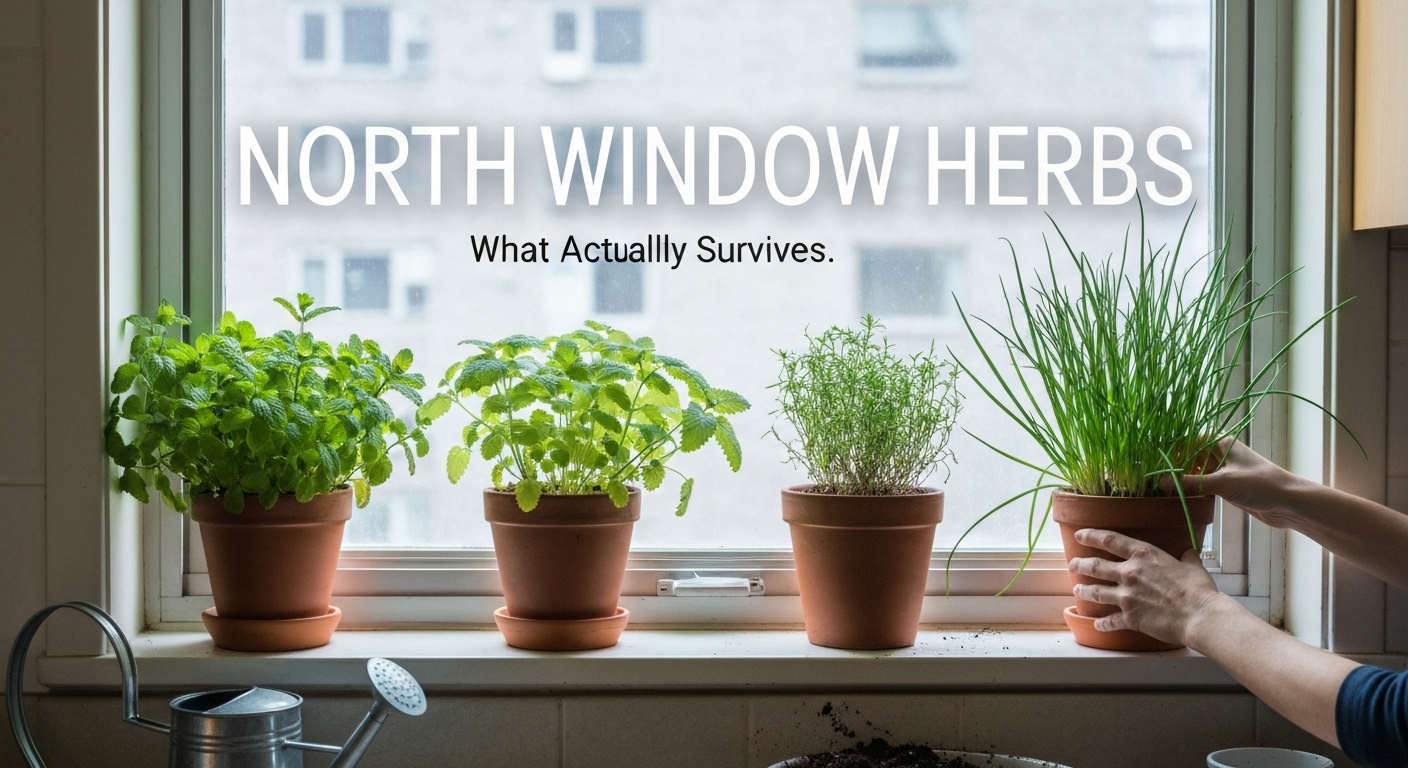
If you’ve ever Googled “how to grow herbs,” you’ve probably felt the same sting of disappointment I did when I first started. Every guide seems to begin with the same golden rule: “Place your pots in a bright, sunny, south-facing window.”
That’s great advice if you have one. But for a long time, I didn’t. I live in a small apartment where my only kitchen window faces due north. According to the textbooks, my herbs should have been doomed.
I spent the last 8 months staring at that window, testing, failing, and eventually figuring out what actually survives in the shadows. I bought basil that turned into leggy beanstalks and died. I watched rosemary dry up and turn gray. But I also made salads with parsley grown right there on the sill.
The short answer is: Yes, you can grow herbs on a north-facing window.
But here is the honest truth: You cannot grow all herbs, and the ones you do grow won’t look like the bushy monsters you see on Instagram. They will be slower, smaller, and need different care.
My name is wissam saddique. I got into indoor container herb gardening after trying to keep a few basic herbs alive in a small apartment and realizing how little straightforward information existed for people working with limited space. What started as a simple attempt to grow basil on a windowsill gradually became a more deliberate process of testing different containers, light setups, soil mixes, and growing routines.
Understanding the North-Facing Light Reality
Before we get into the specific plants, we need to agree on what “north-facing light” actually is.
In the Northern Hemisphere, a north-facing window never gets direct sunlight. You get reflected light—sky light. It is consistent, cool, and shadowless.
When I first put a pot of basil there, I thought, “It’s bright enough to read a book, so it must be bright enough for a plant.” I was wrong. Human eyes are amazing at adjusting to low light; plants are not.
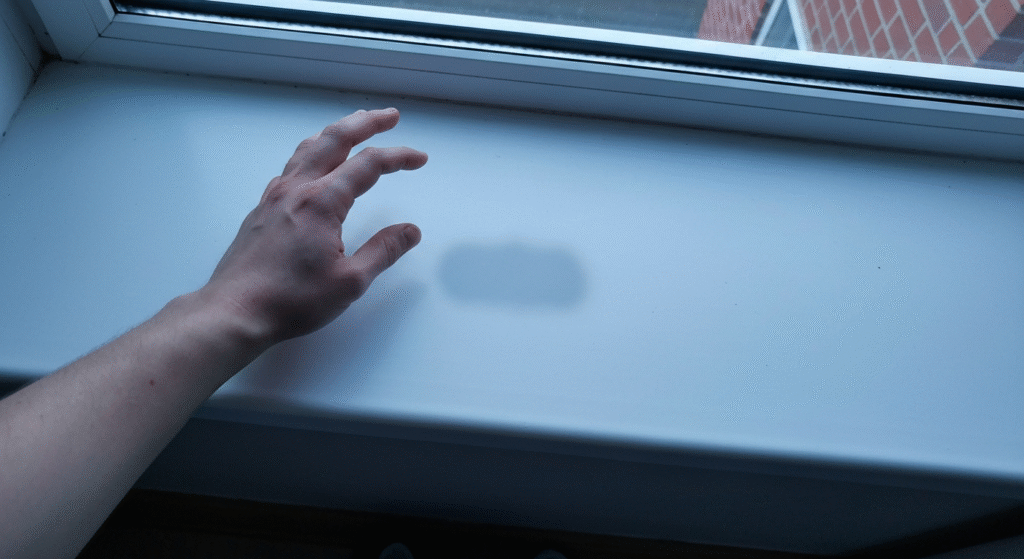
The Shadow Test:
I learned this trick about two months in. Hold your hand about 12 inches away from the windowsill at noon.
- South Window: You see a sharp, dark shadow.
- North Window: You see a faint, blurry shadow, or barely any shadow at all.
That “blurry shadow” zone is considered low to medium indirect light. That is your energy budget. You can’t “spend” more light than that unless you buy a lamp.
The “Survivors”: Herbs That Actually Work
After losing a few plants, I stopped fighting nature and started choosing plants that naturally grow in partial shade or cool forest floors. These are the ones that have consistently worked for me without any grow lights.
1. Mint (The Absolute Champion)
If you have a black thumb and a dark window, grow mint. It is the only herb that actually seemed to enjoy my north window.
- My Experience: I grew Peppermint and Spearmint. Both got a little “stretchy” (longer stems between leaves), but they produced plenty of leaves for tea.
- The Caveat: It grows fast. I had to rotate the pot every 3 days because it would lean aggressively toward the glass trying to find the sun.
2. Parsley (The Slow Burner)
Parsley has a long taproot and doesn’t demand the high-intensity heat that basil does.
- My Experience: I grew Flat-leaf (Italian) parsley. It grew much slower than it would outside—taking about 8 weeks to get harvestable size—but the flavor was perfect.
- The Caveat: Don’t expect a massive bush. You’ll get a steady supply of garnish, but you won’t be making tabbouleh every night.
3. Chives (The Reliable Grass)
Chives are technically bulbs. They seem to tolerate the cool, lower light of a north window better than woody herbs.
- My Experience: They survived well, though the stalks were thinner and floppier than store-bought chives.
- The Caveat: When you cut them, they take a while to bounce back in low light. I recommend having two pots so you can rotate harvesting.
4. Lemon Balm (The Shade Lover)
This is in the mint family, so it shares the “hard to kill” genetics.
- My Experience: This was my surprise favorite. It stayed greener than the mint and didn’t stretch as badly.
- The Caveat: Like mint, it needs its own pot, or its roots will choke out everything else.
Quick Comparison of North-Window Performance
| Herb | Survival Rate | Growth Speed | Main Issue |
| Mint | High | Fast | Gets leggy/messy |
| Lemon Balm | High | Medium | Needs pruning |
| Parsley | Medium-High | Slow | Thin stems |
| Chives | Medium | Medium | Floppy stalks |
The “Heartbreakers”: Herbs to Avoid
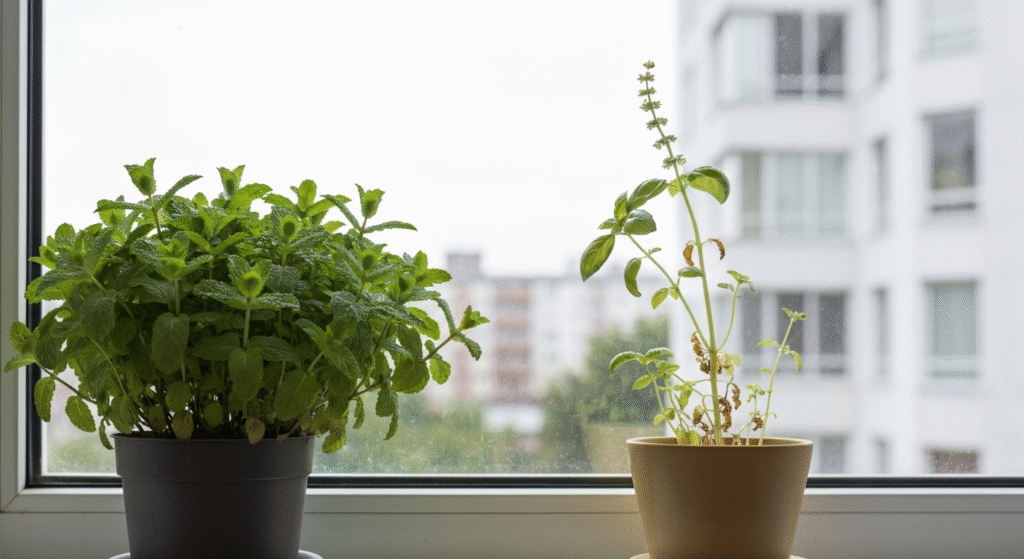
I want to save you money here. I tried these so you don’t have to. Unless you are willing to buy a grow light (which we will discuss later), do not put these in a north-facing window.
- Basil: My basil tragedy was painful. It grew tall, pale, and the leaves tasted like watery lettuce. It needs heat and direct sun to produce the oils that give it flavor.
- Rosemary: This plant needs high intensity light. In my north window, it developed powdery mildew (white dust on leaves) because the air was too cool and damp, and then it slowly turned brown and died.
- Lavender & Thyme: Same story. These are Mediterranean plants. They want baking hot sun and dry soil. A north window is usually too cool and dark.
Signs Your Herbs Are Struggling (And How to Fix It)
Since you are growing in less-than-ideal conditions, your plants will talk to you. You need to learn their language so you can intervene before they die.
1. The Stretch (Etiolation)
This is the most common issue. The plant looks like it’s being pulled like taffy. The space between the leaves (internodes) gets long and thin.
- The Fix: Pinch them back aggressively. Don’t let them get tall. Cut the top set of leaves off to force the plant to grow side shoots. If you let a low-light plant get tall, it will eventually flop over and snap.
2. Pale Leaves
If your bright green parsley turns lime green or yellow, it’s starving for light (photosynthesis isn’t happening enough to produce chlorophyll).
- The Fix: Move it closer to the glass. I mean touching the glass (unless it’s freezing outside). Every inch counts. The light intensity drops off drastically even just one foot away from the window.
3. Soil That Stays Wet
This was my biggest mistake. I watered my north-facing herbs on the same schedule I read about online. Big mistake. Because there is no direct hot sun, the water doesn’t evaporate. The roots sit in cold, wet mud and rot.
- The Fix: Ignore the calendar. Only water when the soil feels dry up to your second knuckle.
Optimizing Your Limited Light
Since we can’t make the sun move, we have to maximize the photons we do get. Here are the low-tech tricks I used to squeeze extra performance out of my window.
clean Your Windows:
I know, it sounds like a chore, but a layer of dust on the glass can block up to 10% of the light. When you are working with a north window, you need that 10%.
Reflect the Light:
I placed a white piece of foam board behind my pots, facing the window. It bounces the light coming from the window back onto the “dark” side of the plant. It’s not a miracle, but it stopped my mint from leaning so hard.
Cooler Temperatures:
North windows are usually cooler. Most herbs like this (65-70°F), but avoid placing them near a radiator or heater. The combination of low light + high heat is deadly. It tells the plant to grow fast (heat) but doesn’t give it the fuel to do so (light), resulting in weak, spindly growth.
When to Call for Backup: Simple Supplementation
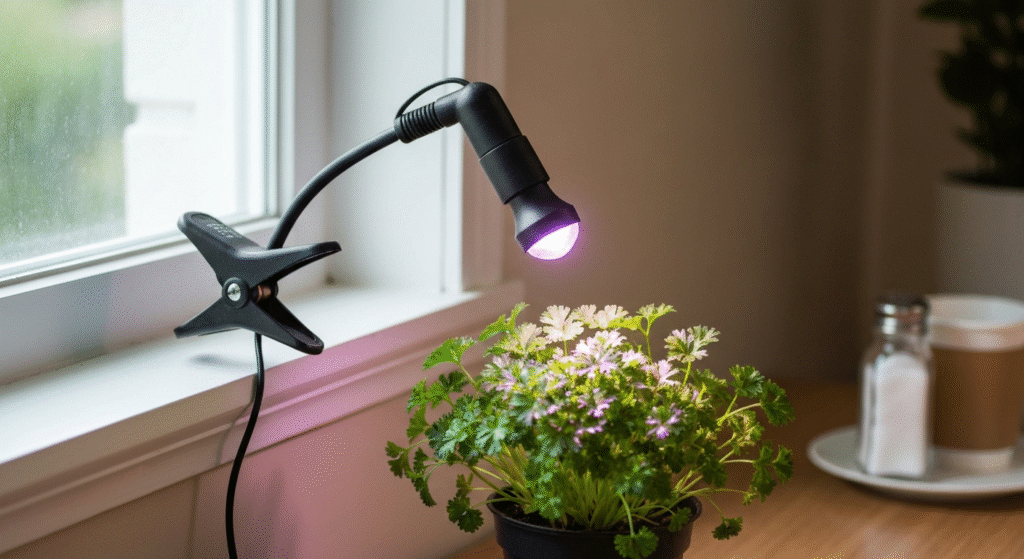
I promised to be honest about what works. While mint and parsley survived with just the window, they thrived when I cheated a little.
You don’t need a $200 professional setup. I bought a simple clip-on LED grow light (the kind with the flexible gooseneck) and clamped it to the side of the shelf.
I ran it for about 4 hours in the evening, after the natural light faded.
- The Result: My chives stood up straighter, and the parsley grew twice as fast.
- The Takeaway: You don’t need it for the “Survivor” list herbs, but if you want to try Basil in a north window, a grow light is mandatory.
Note on Grow Lights: If you do buy one, keep it close. LEDs need to be 6-12 inches above the plant to be effective. If the light is 3 feet away on the ceiling, it’s doing nothing for the plant.
Watering and Soil: The “Low Light” Rules
The biggest reason people kill plants in north windows isn’t actually the darkness—it’s the water.
In a south window, the sun bakes the soil. In a north window, the soil stays cool and damp. If you use a standard heavy potting soil, it will turn into sludge.
My Soil Mix:
I started mixing my own soil to help with drainage. I use:
- 2 parts standard potting mix
- 1 part Perlite (the little white rocks)
The extra perlite creates air pockets. Since the sun isn’t drying the soil out, the air pockets ensure the roots can still breathe.
The “Weight” Test:
Instead of sticking my finger in the dirt constantly, I learned to lift the pot.
- Heavy pot: Don’t water.
- Light pot: Water.
It takes a few weeks to learn the feel, but it’s the safest way to prevent root rot.
FAQs
1. Can I grow vegetables like cherry tomatoes in a north window?
No. Fruiting plants (tomatoes, peppers, cucumbers) require high-energy sunlight to produce fruit. In a north window, the plant might survive as a green vine, but it will likely never flower or produce a single tomato. Stick to leafy herbs.
2. Why is my north-facing mint growing mold on the soil?
This is common in low light. The soil stays wet too long, and the air is stagnant. Scrape off the mold, add a small fan to the room to move the air around, and water less frequently. It’s usually harmless to the plant but a sign you are overwatering.
3. My herbs are leaning toward the window. Should I turn them?
Yes! In a north window, the light source is very one-sided. Rotate your pots a quarter turn every time you water them (or every few days). This keeps the growth balanced so the plant doesn’t topple over.
4. Is a north window better for any plants?
Actually, yes. While herbs prefer sun, many tropical houseplants (like Pothos, Ferns, or Snake Plants) burn in direct south sun. A north window is actually the “luxury suite” for those types of plants, even if herbs find it a bit of a struggle.
Conclusion
So, is your north-facing window a lost cause? Absolutely not.
My kitchen window is never going to produce a massive harvest that feeds a family of four. But it currently holds a healthy pot of mint for my tea, some chives for my eggs, and a small parsley plant.
It taught me that gardening isn’t about having perfect conditions; it’s about matching the right plant to the conditions you actually have. If you start with mint or chives, you can absolutely have fresh greens, even in the shade.
Would you like me to help you create a specific watering schedule based on your pot size and soil type?
External Resources:
For more technical details on light intensity and plant requirements, I recommend reading this guide on Lighting for Indoor Plants by the University of Minnesota Extension.

