
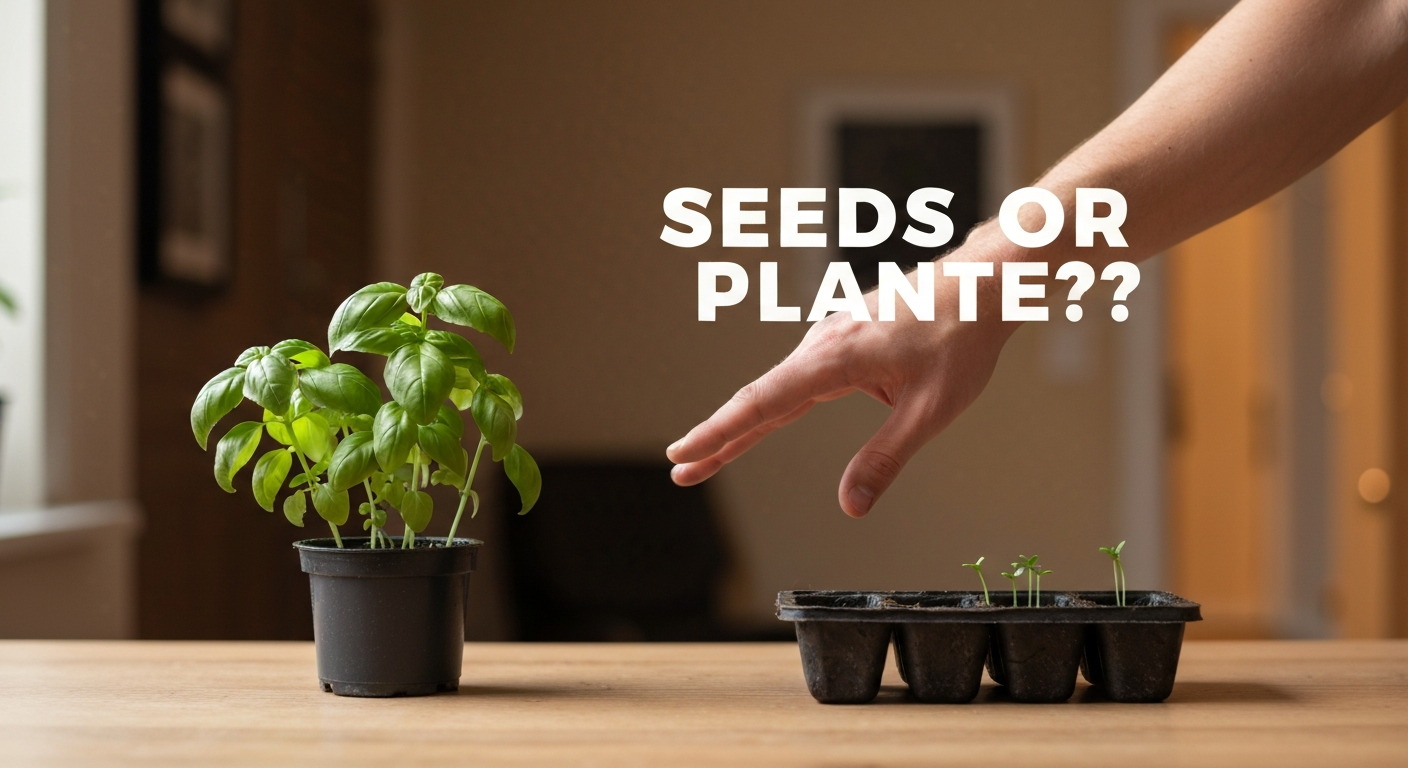
You are standing in the gardening aisle of your local home improvement store. To your left is a rack of colorful seed packets costing about $3 each. To your right are shelves lined with vibrant, green herbs in plastic pots for $4.50.
It seems like a simple choice. One is cheaper; the other is ready to eat. But if you have ever brought a healthy-looking plant home only to watch it wither in a week, or stared at a pot of dirt for a month waiting for a seed to sprout, you know it is not that black and white.
The “seeds vs. starter plants” debate is the first real hurdle every indoor gardener faces. I faced it too, and I realized that the generic advice on the back of the packet doesn’t always hold up when you are gardening in a small living space. So, I decided to stop guessing.
I am Wissam Saddique, and I run Trend Tales Park. I didn’t start with a greenhouse or a backyard; I started with a few windowsills in a small apartment. I know the frustration of having limited space and trying to figure out straightforward gardening advice that actually works indoors. Over the last few years, I have tested different containers, soil mixes, and lighting setups to see what keeps herbs alive in a real-world home environment.
Recently, I ran a 12-week side-by-side trial. I grew basil from seeds and bought a basil starter plant on the same day. I tracked the cost, the effort, the frustration levels, and the final harvest. I wanted to answer one question definitively for beginners: Is it actually worth the hassle to start from seed?
Here is what I found, stripped of the marketing fluff.
The Cost Breakdown: It’s Not Just About the Price Tag
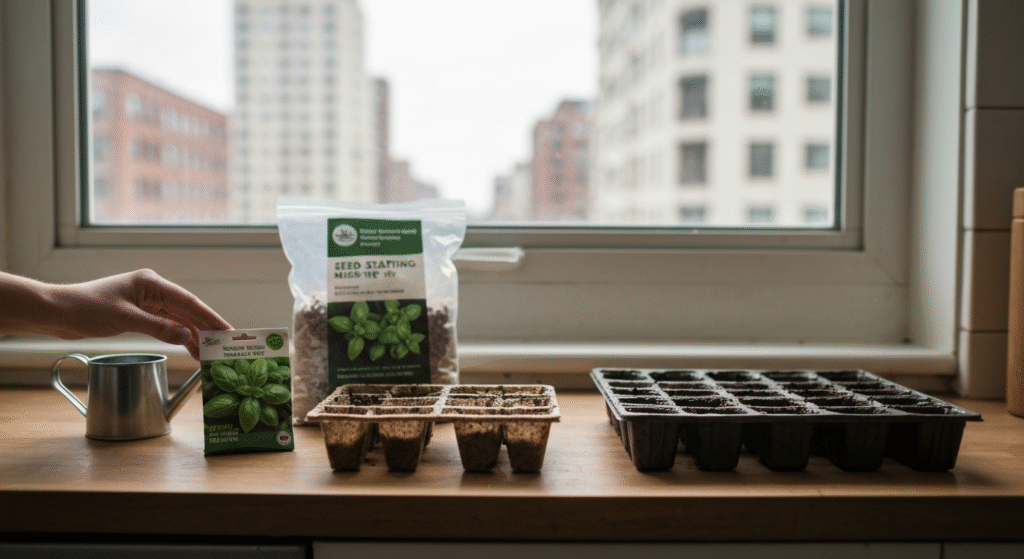
If you look strictly at the receipt, seeds seem like the obvious winner. You get 50 to 100 seeds for less than the price of one plant. But in a small apartment setting, the math changes a little bit.
I tracked every penny I spent to get both options to the point where I could harvest them.
| Expense Item | Starting from Seeds (Cost) | Buying Starter Plant (Cost) |
| The Source | Packet of Seeds: $3.00 | One Nursery Plant: $4.50 |
| The Container | Seed Starting Tray/Small Pots: $5.00 | Decorative Pot (Optional): $2.00 |
| The Soil | Seed Starting Mix: $6.00 | Potting Mix (for repotting): $2.00 |
| Wait Time Cost | 8 Weeks of care before harvest | Ready immediately |
| Total Initial Spend | ~$14.00 | ~$6.50 – $8.50 |
Note: These prices reflect what I paid at my local hardware store. I already had some potting soil, but I bought a fresh bag of seed starting mix because regular soil is too heavy for seeds.
The Reality Check:
Starting from seed actually cost me more up front because I had to buy specific supplies like the lighter seed-starting soil. If I were growing 50 plants, the seeds would be cheaper per plant. But I live in a small apartment. I don’t need 50 basil plants. I need one or two.
If you only want one pot of herbs on your windowsill, the starter plant is arguably the better financial deal because you skip buying the infrastructure required to start seeds.
The Patience Factor: The 12-Week Timeline
This was the most painful part of the experiment for me. I am not the most patient person, and staring at a pot of damp soil for ten days wondering if anything is happening can be maddening.
Here is how the timeline shook out during my 12-week test.
The Starter Plant Timeline:
- Week 1: I brought it home. It looked great. I snipped a few leaves for dinner that night.
- Week 3: It needed to be moved to a slightly larger pot, but it was growing vigorously.
- Week 12: It was a massive bush, providing weekly harvests.
The Seed Timeline:
- Week 1: Dirt. Just dirt. I had to keep it moist constantly.
- Week 2: Tiny green sprouts appeared. Success! But they were fragile.
- Week 4: They were about an inch tall. Still too small to eat. I had to thin them out (kill the weaker ones), which always feels terrible.
- Week 8: Finally, the plants were sturdy enough to harvest a few leaves.
- Week 12: They looked like the starter plant did back in Week 1.
If you are growing for a specific event—say, you want fresh mint for a party in two weeks—do not plant seeds. You will be disappointed. Seeds are a long-term play. Starter plants are for instant gratification.
The “Hidden” Risks of Each Method
Comparing the two isn’t just about time and money; it is about what can go wrong. In my experience, the failures look very different depending on which route you take.
The Risk with Starter Plants: Bringing Home “Guests”
The biggest issue I have faced with nursery plants isn’t the plant itself—it’s the hitchhikers. When you buy a plant from a garden center, it has been living outside or in a greenhouse with thousands of other plants.
In my experiment, the starter basil I bought was healthy, but three days later, I noticed tiny webs on the leaves. Spider mites. Because my apartment is a closed environment, those mites spread to my other houseplants within a week.
The Takeaway: Starter plants are stronger, but they are a biosecurity risk for your indoor garden. You have to inspect them ruthlessly before bringing them inside.
The Risk with Seeds: The “Leggy” Seedling
Seeds are sterile. You won’t bring bugs in with a seed packet. However, the risk here is environmental.
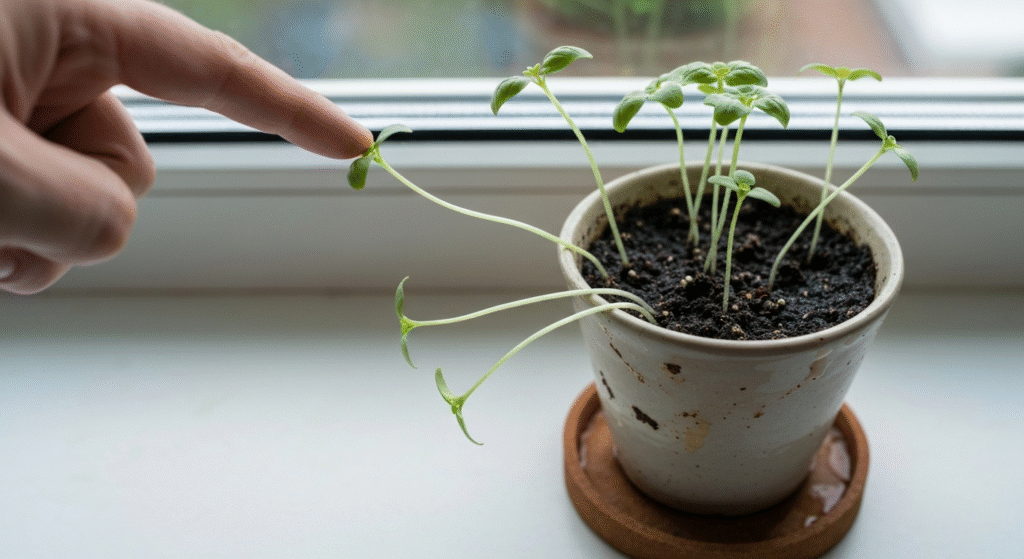
In my apartment, I don’t have a greenhouse-quality grow light in every corner. I rely mostly on windows. When my seeds sprouted, they immediately started stretching desperately toward the window. This is called getting “leggy.”
Leggy seedlings are weak. They fall over easily and often die before they become real plants. I lost about half of my seedlings because the light in my living room just wasn’t intense enough for those crucial first weeks.
Difficulty Level: Which is Easier for Beginners?
I used to think seeds were “advanced” and plants were “beginner.” After this trial, I actually think it is the opposite, but with a caveat.
Starter Plants are Harder to Kill Immediately.
A starter plant has a root system. It has reserves. If you forget to water it for a day, it might wilt, but it will bounce back. It has resilience.
Seeds are extremely fragile.
If you let a sprouting seed dry out for just a few hours, it is dead. Game over. If you water it too much, it rots (dampening off). The margin for error with seeds is razor-thin during the first month.
However, once a seed-grown plant matures, I found it was actually tougher than the store-bought one. It was adapted to my apartment’s humidity and light from day one. The store-bought plant went through “transplant shock” where it dropped leaves because it missed the high humidity of the greenhouse.
The Verdict: When to Buy vs. When to Sow
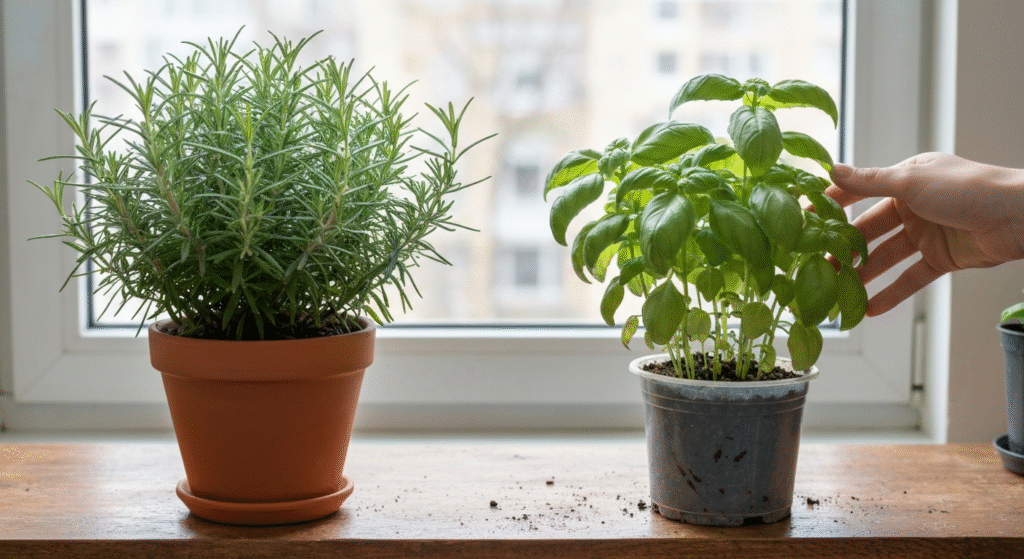
After spending months watching these herbs grow (and die), I have developed a simple decision matrix. I use this every time I want to add a new herb to my collection.
Buy a Starter Plant If:
- You want to eat it now: If you are buying it because you want cilantro for tacos this Friday, buy the plant.
- You only want one: If you have space for just one pot of rosemary, spending money on a whole packet of seeds and soil is a waste.
- It is a “Hard” Herb: Some herbs are notoriously difficult to start from seed. Rosemary, lavender, and thyme take forever to germinate and grow very slowly. I tried growing rosemary from seed once; six months later, it was still only two inches tall. Never again.
- You struggle with consistency: If you travel often or forget to check your plants daily, seeds will likely die on you.
Start from Seeds If:
- You want “Easy” Herbs: Basil, cilantro, and parsley are incredibly easy to grow from seed. They sprout fast (usually within 7-10 days) and grow quickly.
- You need volume: If you want to make big batches of pesto and need 10 basil plants, seeds are the only economical way to do it.
- You want weird varieties: You will only find “Sweet Basil” at the store. If you want “Lemon Basil” or “Purple Ruffles Basil,” you have to buy seeds. The nursery rarely carries the cool stuff.
- You are worried about pests: If you have other expensive houseplants and don’t want to risk bringing in bugs, seeds are the safest option.
A Note on Specific Herbs
Not all herbs play by the same rules. Based on my testing in the apartment, here is how I categorize common herbs. This list alone has saved me hours of frustration.
The “Buy the Plant” List:
- Rosemary: Germination is terrible (often 30%). Growth is glacial.
- Thyme: The seeds are like dust. Hard to handle, slow to grow.
- Mint: Mint is easier to grow from a cutting or a starter. Plus, mint seeds can be inconsistent in flavor.
- Oregano: Similar to thyme, it takes a long time to get a harvestable bush.
The “Start from Seed” List:
- Basil: The king of seed starting. It wants to grow.
- Cilantro: Cilantro has a taproot (a main root that goes deep). It hates being transplanted. It is much better to start this from seed directly in the pot you plan to keep it in.
- Parsley: Slow to start (be patient), but grows well once it pops up.
- Chives: surprisingly easy from seed, though they look like tiny blades of grass for a long time.
Making the Final Choice
When I look back at my windowsill now, it is a mix of both methods. I have a big rosemary bush I bought three years ago as a starter. But right next to it is a row of basil I started from seed last month.
There is a special kind of pride in eating something you grew from a speck of dust. It connects you to the process in a way that buying a plant doesn’t. When I see the basil seeds sprout, I feel like I have accomplished something.
But let’s be real—sometimes you just want to cook dinner. There is no shame in taking the shortcut. In fact, for most beginners living in small spaces like mine, I usually recommend buying your first one or two plants. Get a win under your belt. Keep something alive. Once you have the confidence, then try a packet of basil seeds.
If you are looking for high-quality seeds or plants, it helps to look for reputable sources rather than just the generic rack at the grocery store. For deep dives on specific plant varieties and their hardiness, I often cross-reference with university extension data, which provides unbiased growth charts. You can find excellent data on herb propagation at the University of Minnesota Extension.
Frequently Asked Questions
1. Can I use the seeds from my spice rack to grow herbs?
Technically, yes, sometimes. Whole coriander seeds might grow cilantro, and mustard seeds might sprout. But most jarred spices have been dried at high heat or irradiated, which kills the seed. I have tried this with supermarket coriander; I got about a 10% sprout rate compared to 90% with gardening seeds. It is better to spend the $3 on real packet seeds.
2. Do starter plants need to be repotted immediately?
Almost always. When I buy a starter plant, I gently pull it out of the pot to check the roots. Usually, they are “root bound”—meaning the roots are circling the bottom of the pot because they have run out of room. If you don’t move them to a slightly larger pot with fresh soil, the plant will stop growing and eventually struggle.
3. How long do herb seeds last if I don’t use the whole packet?
I store my leftover seeds in a shoebox in my closet (cool and dry). Most herb seeds like basil and parsley stay good for 2 to 3 years. However, things like chives and onions lose viability very fast—usually within a year. If your seeds are old, just plant twice as many to make up for the ones that won’t sprout.
4. Why do my seedlings keep dying right after they sprout?
This is usually “damping off,” a fungal disease caused by too much moisture and poor airflow. In a small apartment, air can be stagnant. I learned to let the soil surface dry out slightly between waterings and sometimes I run a small fan near the seedlings to keep the air moving. It made a huge difference in my survival rates.
What To Do Next
If you are feeling ready to start, look at your windowsill space right now. If it is empty, go buy one starter plant of Basil or Mint this weekend. Don’t worry about seeds yet. Just bring one plant home, check it for bugs, and see if you can keep it happy for a month. If you can do that, you are ready for the next level.

