
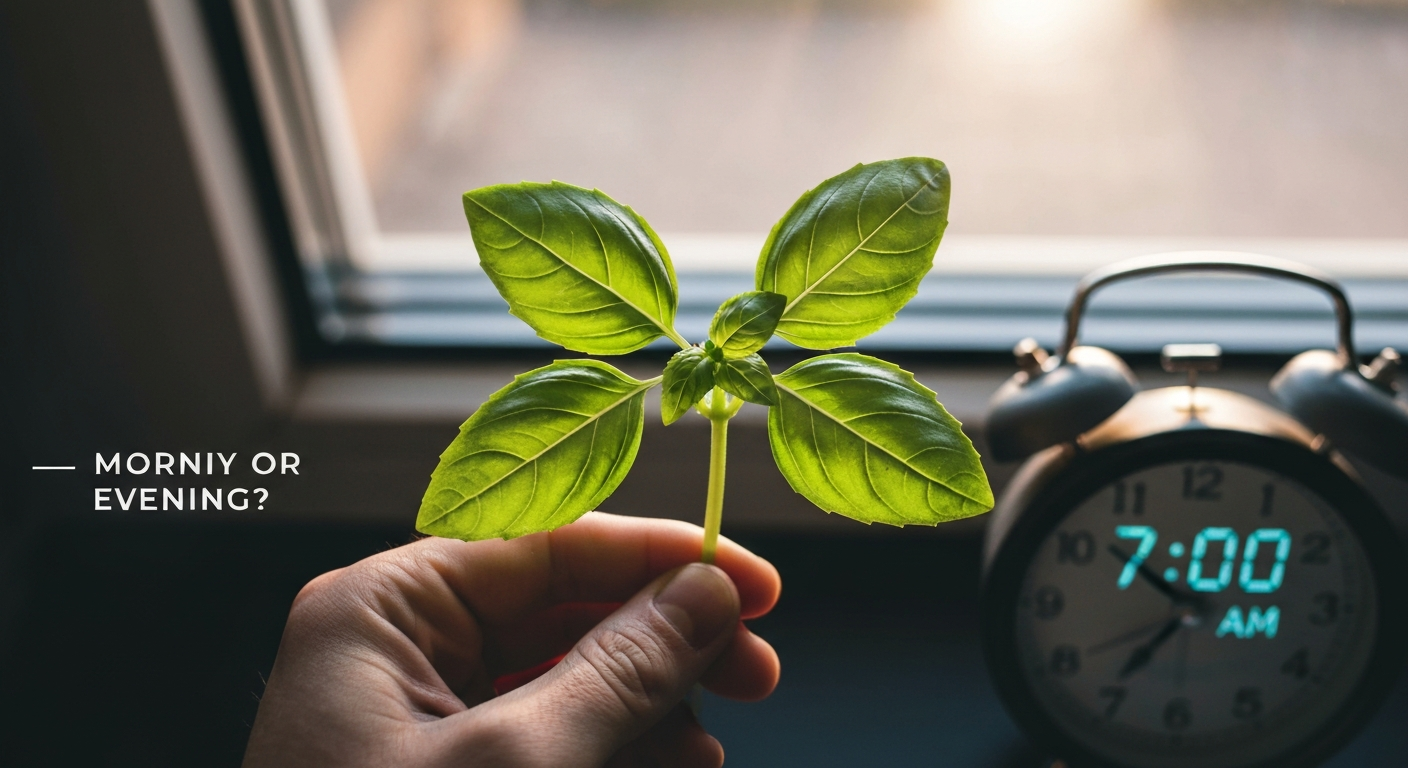
I used to think gardening was just about keeping the plant alive. When I first started growing herbs in my small apartment, I was just happy if the basil didn’t turn yellow and die within a week. But once I got comfortable with the basics of soil and watering, I started running into all these specific “rules” online. One of the most persistent ones was about the best time of day to harvest herbs.
According to almost every gardening book, there is a “perfect” moment to snip your herbs. But when you live in a small space and you’re cooking dinner at 7:00 PM, you don’t always have the luxury of following the textbook. I wanted to know if breaking this rule actually ruined the flavor, or if it was just advice meant for professional farmers.
I’m Wissam Saddique, and I’ve spent a lot of time obsessing over these details in my own indoor container garden. My journey started with a few pots on a windowsill and a lot of questions. Over the last few years, I’ve moved from just keeping plants alive to actually testing what makes them taste better. I realized that while there is a “scientific” best time, the reality of indoor gardening is a bit more flexible. I’m not a botanist, but I am someone who cooks with what I grow every day.
Here is what I have learned about harvest timing, essential oils, and whether you really need to set an alarm to pick your parsley.
The Golden Rule: Why Morning is Usually Recommended
If you ask a traditional gardener when to harvest, the answer is almost always: Mid-morning.
Specifically, the advice is usually “after the dew has dried, but before the sun gets hot.” There is actually some solid biology backing this up. Herbs are valued for their flavor and aroma, and that flavor comes from essential oils stored in the leaves.
In the cool of the early morning, plants are generally fully hydrated. The leaves are “turgid” (which is a fancy way of saying they are stiff and full of water). As the sun comes up, the plant starts photosynthesis.
However, as the day gets hotter, especially around noon or early afternoon, the plant has to work harder to stay cool. It starts transpiring—releasing water vapor through its pores. This process can cause the essential oils to evaporate slightly into the air. If you have ever walked past a lavender bush or a rosemary plant in the hot afternoon sun and smelled that strong scent, that’s actually the flavor leaving the plant and floating into the air. If you harvest then, you might be getting a leaf with slightly less “punch.”
So, the textbook logic is: Harvest when the oils are most concentrated in the leaf, which is usually before the heat hits.
My “Basil Test”: Testing the Theory Indoors
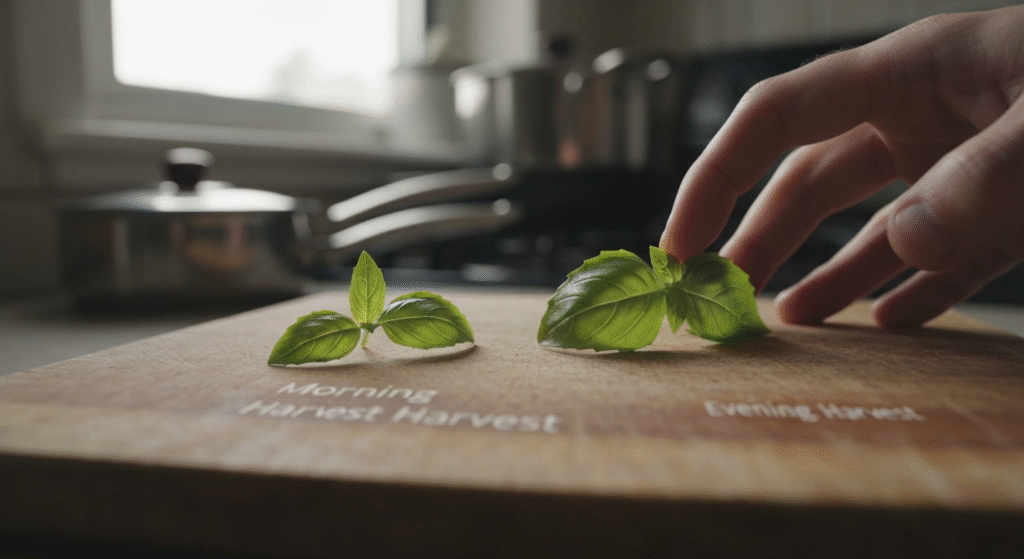
I am a skeptic by nature. I read all about the morning harvest rule, but I wanted to see if I could actually taste the difference. I wasn’t growing acres of crops; I was growing pots of basil and mint in a temperature-controlled living room.
So, I ran a small, informal test a while back.
For two weeks, I only harvested my Genovese Basil in the morning, right around 9:00 AM. I used it for lunches and stored some for dinner. Then, for the next two weeks, I switched to harvesting only in the evening, right before I started cooking, usually around 6:30 PM or 7:00 PM.
Here is what I noticed:
- The Snap Factor: The morning basil was definitely crisper. When I pinched a stem, it snapped cleanly. The leaves felt firm. The evening basil, even though my apartment isn’t overly hot, felt a little softer. It wasn’t wilted, but it didn’t have that same hydraulic pressure inside the stem.
- The Aroma: When I chopped the morning basil, the scent hit me immediately. It was sharp and peppery. The evening basil still smelled like basil, obviously, but I had to get my nose a little closer to the cutting board to get that same intensity.
- The Taste: This is where it got interesting. Once the basil was tossed into a hot tomato sauce, I honestly couldn’t tell the difference. The heat of the cooking process seemed to equalize things. However, for a fresh Caprese salad, the morning basil held its texture better on the plate.
My takeaway from that little experiment was that while there is a difference, it isn’t a disaster if you harvest late.
The Indoor Advantage: Why Your Apartment is Different
Most of the generic advice you find online assumes you are gardening outdoors. In an outdoor garden, the temperature swings are drastic. It might be 60°F at dawn and 90°F by 2:00 PM. That heat stress causes the plant to close its pores and wilt to conserve water.
Indoors, we are playing by different rules.
In my apartment, the temperature usually stays between 68°F and 75°F all day. I don’t have scorching noon sun beating down on my pots. I have grow lights or filtered window light.
Because the environment is controlled, the “essential oil loss” that happens outdoors isn’t as severe inside. Your indoor cilantro isn’t fighting for its life against a heatwave at noon. This means the window of opportunity for a good harvest is much wider for us indoor gardeners than it is for someone growing in a raised bed outside in July.
When to Avoid Harvesting: The “Stress Zone”
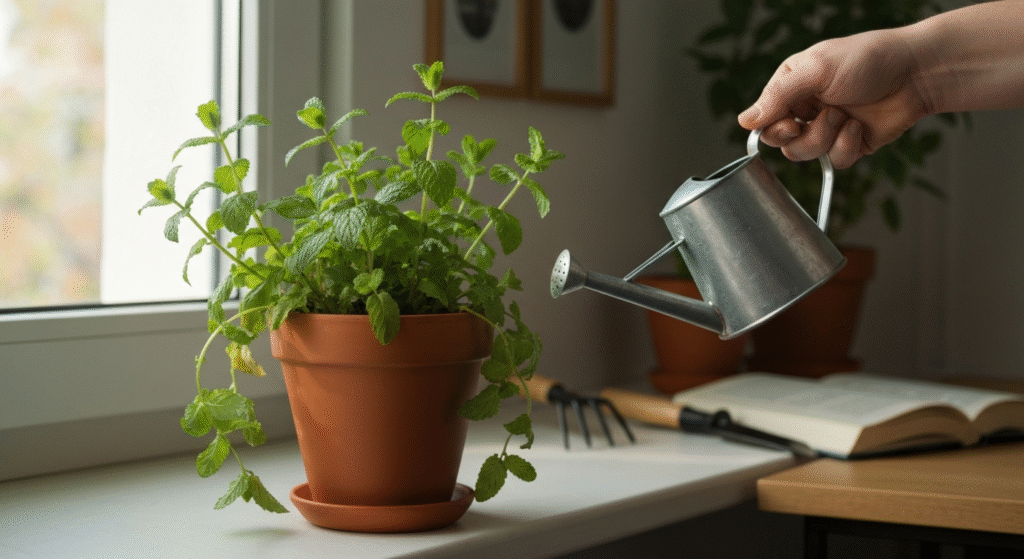
Even though indoor plants are protected, there are still times you should avoid taking cuttings if you want the best quality.
The worst time to harvest is when the plant is visibly stressed. This usually happens if:
- You forgot to water it and the leaves are drooping.
- It is sitting in direct, hot sunlight (like a south-facing window at 1:00 PM).
If you harvest a limp, thirsty plant, two things happen. First, the flavor will be dull because the plant’s internal chemistry is focused on survival, not oil production. Second, cutting a stressed plant is like kicking someone when they are down. The plant needs energy to heal the wound you just made. If it is already struggling for water, that cut might turn brown or damage the stem further down than you intended.
If I see my mint looking a little sad and droopy, I water it and wait. Usually, within two hours, it perks back up. That is when I harvest.
The Case for Evening Harvesting
Let’s be real for a second. Most of us are hobbyists, not commercial farmers. We grow herbs because we want fresh flavor for our dinner.
If I am making a stir-fry at 7:00 PM, I am not going to say, “Oh no, I missed the morning window, I guess I’ll use dried powder.” I’m going to walk over to my shelf and snip some Thai Basil.
There is actually a counter-argument in the gardening world that suggests evening harvesting might have its own benefits, specifically regarding sugar content. During the day, plants photosynthesize. They turn light into energy (sugars). By the end of the day, the leaves are technically fuller of these sugars than they were in the morning.
Some growers claim this makes evening-harvested herbs taste sweeter. In my experience with savory herbs like oregano or thyme, I haven’t noticed a sweetness spike. But it is worth noting that while you might lose a tiny bit of aromatic oil in the evening, you aren’t harvesting “dead” leaves. They are still biologically active and full of nutrients.
Visual Cues: What to Look For
Instead of watching the clock, I’ve learned to watch the plant. The plant tells you if it is ready to be cut better than a watch does.
Here is a quick breakdown of what I look for before I bring out the scissors.
| Condition | What it Looks Like | Verdict |
| High Turgidity | Leaves are pointing up or out, surface is smooth and firm. | Best time to harvest. |
| Heat Stress | Leaves look slightly dull or are curling inward to hide from light. | Wait. Let it cool down. |
| Dehydration | Stems are bending downward, leaves feel soft like fabric. | Stop. Water and wait 2-3 hours. |
| Post-Watering | Plant looks perky, soil is moist but not soggy. | Good to go. |
This approach is much more practical for an indoor gardener. If your grow lights turn on at 8:00 AM, your “morning” might actually be 10:00 AM physically. If you work a night shift and wake up at 2:00 PM, that is your morning. Just look for the stiffness in the leaves.
Does Timing Affect Shelf Life?
This is one area where timing actually matters more than flavor.
If you are cutting herbs to use immediately (literally throwing them into the pot), timing is negligible. But if you are harvesting a big batch to store in the fridge for the week, or to dry for later, harvest timing is critical.
Herbs harvested in the cool morning have the highest water content and the least amount of stress. They tend to stay fresh longer in a glass of water or a plastic bag.
I once harvested a bunch of dill in the late afternoon when the apartment was warm. I put it in a jar of water in the fridge, and it went limp within two days. The next batch, which I cut first thing in the morning while the coffee was brewing, stayed crisp for almost a week.
If you are “meal prepping” your herbs, stick to the morning rule. It buys you a few extra days of freshness.
Adjusting for Grow Lights
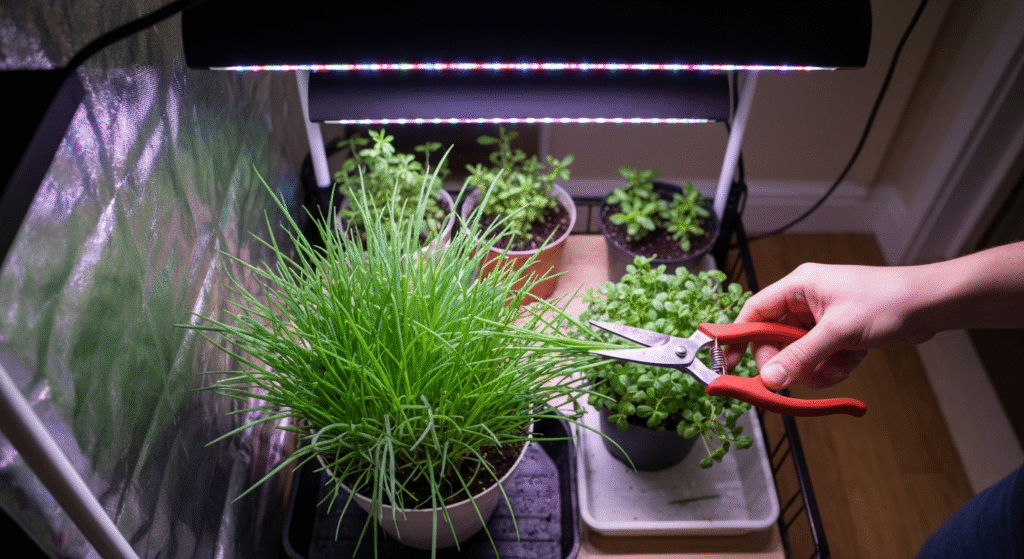
If you use grow lights like I do for some of my setup, you essentially control the sun. This gives you a distinct advantage.
Plants have a circadian rhythm, just like people. They “wake up” when the lights come on. If you run your lights from 6:00 AM to 8:00 PM, the plant anticipates that cycle.
For the absolute best results under lights, I try to harvest about an hour or two after the lights turn on. This gives the plant time to wake up and start its metabolic processes, but the “heat” from the lights (even LEDs produce some heat) hasn’t been baking the leaves for 12 hours yet.
If you harvest right before the lights go out, the plant has been working all day. It’s tired. It’s full of sugars, yes, but the water pressure might be lower.
My Current Routine
After all my testing and reading, I’ve settled on a routine that balances quality with sanity.
I try to do my “maintenance harvesting”—the big cuts where I’m pruning the plant back to encourage growth—on Saturday mornings. I have the time, the plants are fresh, and I can process the herbs properly.
But for daily cooking? I harvest whenever I am hungry.
The difference in flavor between a basil leaf picked at 9:00 AM and one picked at 7:00 PM is maybe 5% to 10%. The difference between fresh basil picked at 7:00 PM and the dried stuff in a jar is 100%. Don’t let the pursuit of perfection stop you from using your garden. The fresh herb is always the winner, regardless of the hour.
Also, if you are looking for more technical details on how plants produce these oils and why environmental factors matter, this guide from the University of Minnesota Extension covers the broader strokes of growing and harvesting quality herbs.
Summary of Pros and Cons by Time of Day
To make this easier to digest, I broke down the trade-offs of harvesting at different times. This helps you decide when to snip based on what you need the herbs for.
| Time of Day | Pros | Cons | Best Use Case |
| Early Morning (After dew dries) | Max essential oils, crisp texture, longest shelf life. | Requires planning ahead; you might not be cooking then. | Drying, freezing, or storing in the fridge for later. |
| Mid-Day | Convenient for lunch prep. | Plant may be stressed or limp; oils might be evaporating. | Immediate use if plant looks healthy. |
| Evening | Highest sugar content (potentially), convenient for dinner. | Lower water content, herbs may wilt faster in storage. | Fresh cooking (soups, stews) where texture matters less. |
Frequently Asked Questions
1. Can I harvest herbs immediately after watering them?
No, it is better to wait. When you water a plant, it takes time for the roots to absorb the moisture and transport it up to the leaves. If you harvest immediately after pouring water, the leaves haven’t rehydrated yet. I usually wait about 1 to 2 hours after watering to let the plant become turgid (stiff) again before cutting.
2. Does the “morning rule” apply if I am using grow lights?
Yes, but you control the morning. If your lights turn on at noon, then 1:00 PM or 2:00 PM is technically your plant’s “morning.” The goal is to harvest shortly after the “sun” comes up for the plant, before the heat of the lights has been on the leaves for many hours.
3. Will harvesting at night hurt the plant?
No, harvesting at night will not kill or damage your plant. The cut might heal slightly slower than it would in the morning because the plant’s metabolism slows down in the dark, but for small, healthy indoor herbs, the risk is negligible. The biggest downside is just that the cuttings might be a bit limper.
4. Is it true that harvesting on a cloudy day is better?
Actually, yes. On a cloudy day (or if you dim your grow lights), the temperature is lower and the evaporation of essential oils slows down. This extends the “perfect harvest window” throughout most of the day. If you are growing on a windowsill and it’s a rainy, overcast day, you can pretty much harvest anytime with great results.
Final Thoughts
If you have the time and you want to feel like a master gardener, go ahead and harvest your herbs in the mid-morning. It really does maximize the scent and the crispness of the leaves, especially if you plan on drying them.
But if you are just a guy like me, standing in a small kitchen trying to make a decent pasta sauce after a long day of work, just cut the herbs. The flavor of something you grew yourself, picked seconds before eating, is going to beat anything else, no matter what time the clock says it is.

