
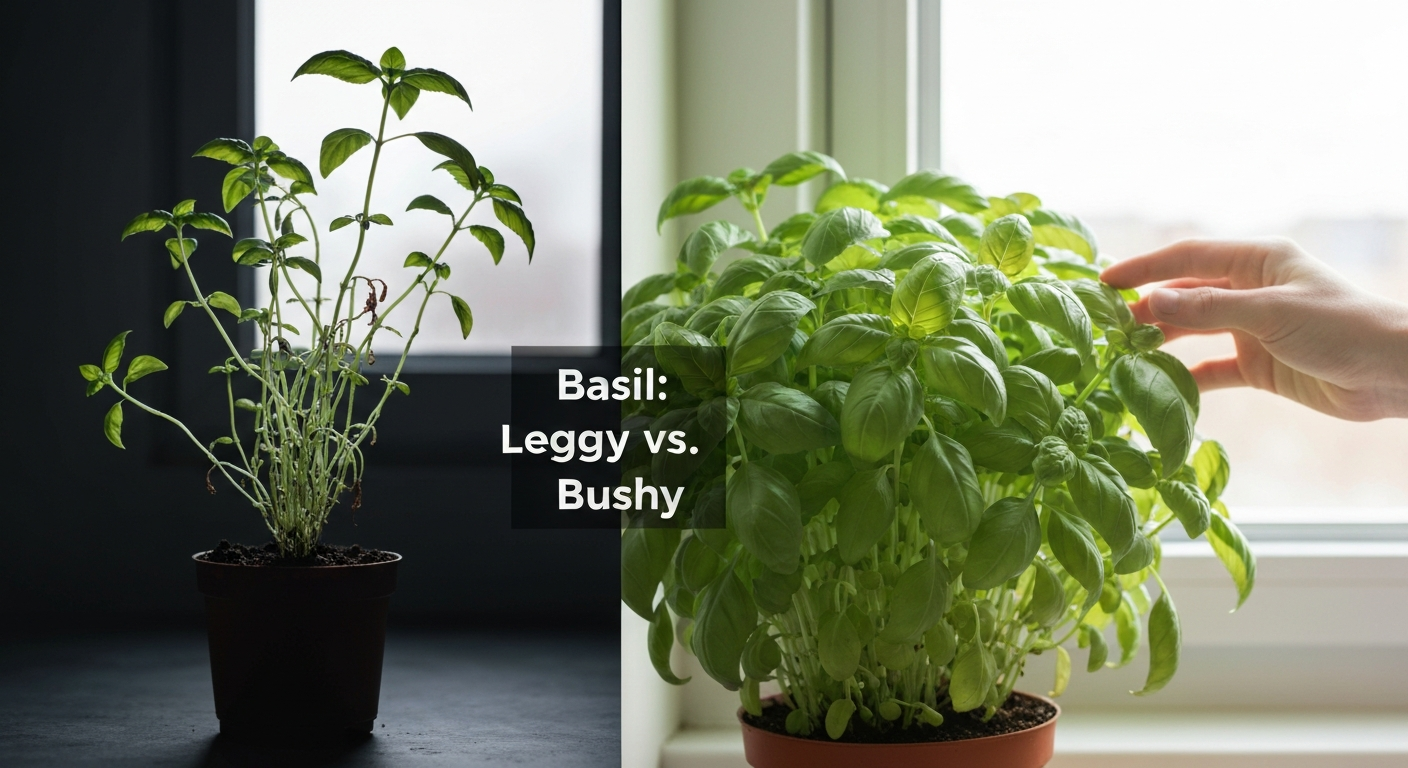
I used to think basil just naturally grew into a weird, tall stick. I would buy those bushy starts from the nursery, put them on my windowsill, and watch them slowly transform into leaning towers of green with just a few sad leaves at the top. It was frustrating. I assumed I just didn’t have the “green thumb” everyone talks about.
It turns out, I wasn’t killing my plants—I just wasn’t being mean enough to them.
My name is Wissam Saddique, and I run Trend Tales Park. I live in a small apartment, which means I don’t have the luxury of outdoor garden beds where plants can sprawl out however they like. I got into indoor container herb gardening out of necessity; I wanted fresh flavors but had zero ground space. Through a lot of trial and error (and a few composted failures), I learned that the secret to that lush, restaurant-quality basil isn’t just water or soil—it is the pinch.
I remember the first time I successfully pinched a basil plant. It felt completely wrong. The plant was barely six inches tall, looking healthy and happy, and the advice I read said to cut off its head. I hesitated for two days before I finally made the snip. Two weeks later, I didn’t have a scarred plant; I had a bush twice as wide as before. Since then, I’ve made pinching a weekly ritual in my apartment garden.
If your basil looks more like a beanpole than a bush, you aren’t alone. This is the single most common issue for indoor growers. Here is exactly how I fix it, and how you can too.
Understanding “Leggy” Basil: Why It Happens
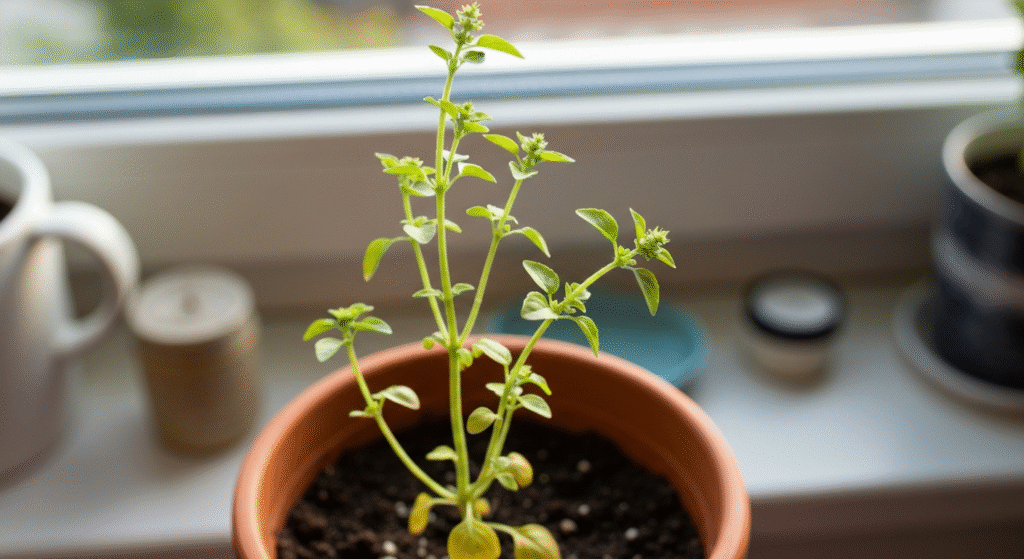
Before we get the scissors out, we need to understand what we are fighting. “Leggy” is a gardening term that describes a plant that is growing tall, thin, and weak. The stem stretches out, often leaving large gaps between the sets of leaves.
In a small apartment setup, space is everything. A leggy plant is a waste of space. It is top-heavy, prone to falling over, and produces far fewer leaves than a compact plant.
There are two main culprits here. The first is light. If your basil is reaching desperately for a dim window, it stretches. But here is the thing I discovered: even with perfect light (I aim for that 6-8 hour sweet spot), basil still wants to grow straight up. It is biologically programmed to do so.
If you don’t intervene, the plant pours all its energy into the main stem to reach the sun and eventually make flowers. By pinching, we hack that biology. We force the plant to stop focusing on height and start focusing on width.
The Fear of the First Cut
I need to address the emotional side of this because it was a huge hurdle for me. When you have nurtured a plant from a seedling, kept it watered, and watched it grow, taking a pair of shears to the healthiest part of the plant feels like vandalism.
You might worry you will stunt the growth or introduce an infection. I had those same worries. I spent a solid month just letting one of my early plants grow wild because I was too chicken to cut it. It ended up three feet tall, flopped over under its own weight, and tasted bitter.
You have to trust the process. Basil is incredibly resilient. It is actually part of the mint family, which is famous for being aggressive growers. Think of pinching not as hurting the plant, but as giving it directions. You are telling it, “Don’t go up, go out.”
The Science of Apical Dominance (Simplified)
I promise not to turn this into a biology textbook, but knowing why this works gave me the confidence to keep doing it.
Basil has a main stem that grows upward. The tip of this stem is called the “apical bud.” This bud produces a hormone called auxin. As long as that bud is attached, the auxin flows down the stem and chemically suppresses the side buds (the little tiny leaves tucked in the crooks of the branches) from growing.
It’s basically the boss at the top shouting, “everyone else stay small!”
When you pinch off that top bud, you remove the source of the suppressing hormone. Suddenly, the side buds below the cut wake up. They start growing aggressively. Instead of one vertical stem, you now have two side branches growing outward in a “V” shape.
If you pinch those two new branches later, you get four. Then eight. This is the multiplication effect that turns a stick into a shrub.
The Tools You Need (and Don’t Need)
You do not need a fancy gardening kit for this. In fact, keeping it simple is better for indoor growers like us.
| Tool | My Verdict | Notes |
| Micro-Tip Pruning Snips | Best Option | These are sharp and precise. They make a clean cut that heals fast. |
| Kitchen Scissors | Okay | A bit bulky. It’s hard to get close to the node without accidentally nicking other leaves. |
| Fingernails | Good (for soft stems) | I use my thumb and index finger for young, tender growth. It’s quick and easy. |
| Knife | Avoid | Too dangerous for the plant. It’s easy to slip and slice the main stem. |
I personally keep a small pair of micro-snips right next to my pots. It reminds me to check them often. If the stems are still green and soft, I just use my fingernails. It is oddly satisfying to feel that crisp snap.
Step-by-Step: How to Pinch Basil Correctly
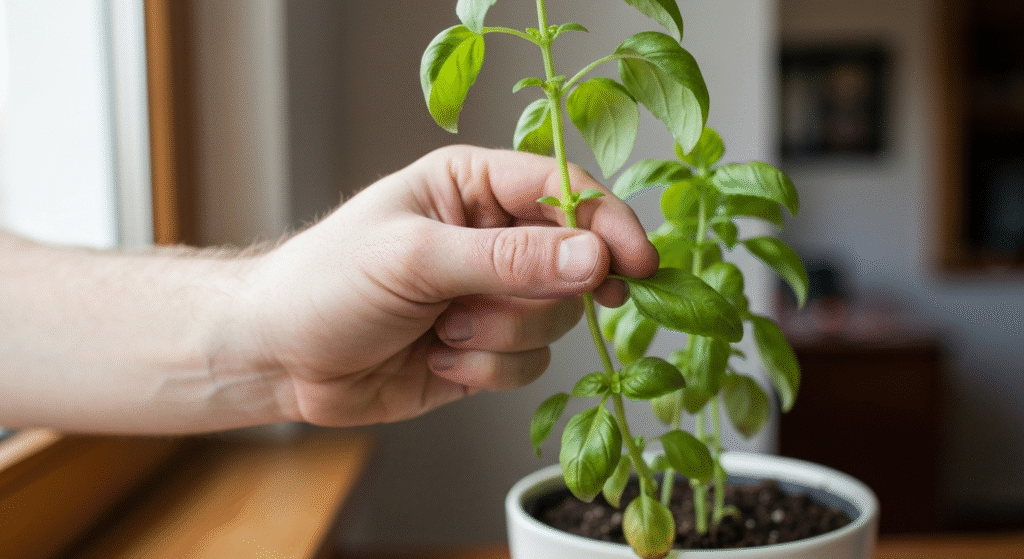
This is the method I have refined over the last year of growing in my apartment. It works for almost any variety, but I use it mostly on Genovese and Sweet Basil.
Step 1: Wait for the Right Height
Patience is key here. Do not pinch a baby seedling. The plant needs a strong root system and enough leaves to power its recovery after the cut.
I wait until my basil is at least 6 inches tall. At this point, it usually has three to four sets of “true leaves.” True leaves are the mature leaves that look like basil, not the tiny rounded ones that come out of the seed first.
If you pinch too early, the plant might not have enough solar panels (leaves) to generate the energy needed for new growth.
Step 2: Identify the Node
Look closely at the main stem. You will see places where leaves grow out of the stem on opposite sides. These points are called nodes.
Now, look right in the crook between the main stem and the leaf stem. You should see tiny little green shoots nesting there. These are the “sleeping” side shoots I mentioned earlier. We want to wake them up.
Step 3: The Cut Zone
You want to cut the main stem just above a node.
I usually count up from the bottom. I leave the bottom two sets of leaves alone. I look at the third set of leaves, find the node just above them, and that is my target.
Crucial Detail: Do not leave a long stub of stem above the node. That stub will just rot and could invite disease. Cut about a quarter-inch above the leaves. Close enough to be neat, but not so close you damage the tiny sleeping buds.
Step 4: The Execution
Take your snips (or your fingers). Make a clean, decisive cut. Don’t saw at it.
If you are using your fingers, pinch the stem firmly between your thumbnail and index finger and push. It should snap cleanly. If the stem is woody or tough, stop. Use scissors instead so you don’t crush the plant tissues. Crushed stems don’t heal well.
Step 5: Repeat on Side Branches
This isn’t a one-time event. This was my mistake early on; I pinched once and thought I was done.
About two or three weeks after your first pinch, those two new side branches will have grown long enough to have their own sets of leaves. Once they have 2-3 sets of leaves, pinch the tips of those branches too.
This creates exponential growth. One stem becomes two. Two become four. Four become eight. That is how you get that bushy, dense look in a small container.
My Pinching Timeline
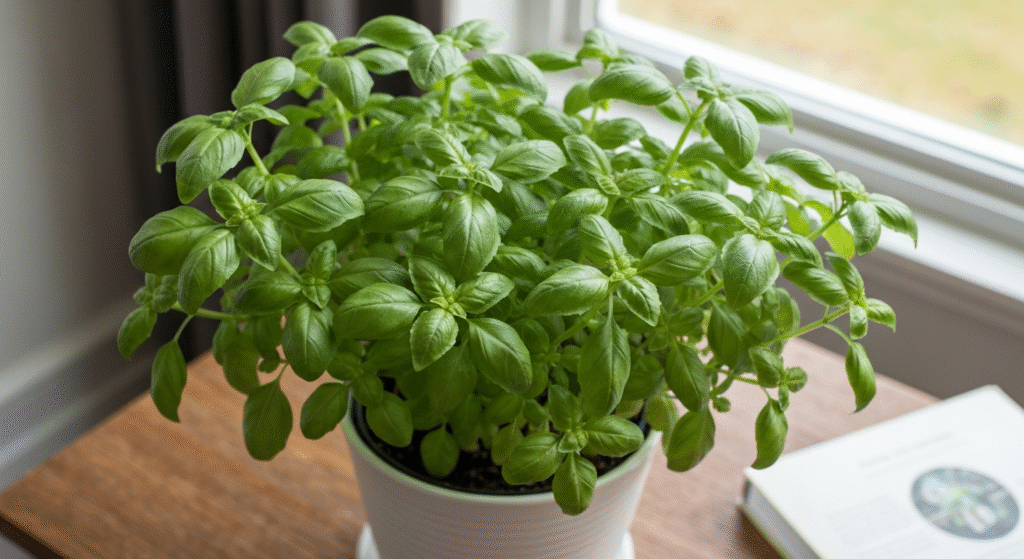
Consistency is what separates the sad basil from the glad basil. I treat my indoor garden like a routine chore, just like doing the dishes (though much more enjoyable).
Here is the schedule I generally follow during the active growing season (spring and summer):
- Day 1: Plant reaches 6 inches. First pinch of the main stem.
- Day 7-10: Observe new growth. The side shoots should be elongating.
- Day 14-21: The side shoots are now long enough to be pinched. I snip the tips of these new branches.
- Ongoing: Every 7 to 10 days, I inspect the plant. Any branch that looks like it is making a run for the ceiling gets pinched back to a lower node.
I have found that checking weekly prevents the plant from getting away from me. If you wait a month, you end up having to cut off huge chunks of the plant, which can be stressful for it (and you).
What If It’s Already Leggy? (The “Hard Prune”)
Ideally, you start pinching when the plant is young. But sometimes life happens. Maybe you bought a plant that was already tall and lanky from the grocery store, or you forgot to check on your windowsill garden for a few weeks.
I had a plant last winter that I neglected. It was nearly a foot tall, with a bare, woody stem at the bottom and a tuft of leaves at the very top. It looked terrible.
I decided to try a “hard prune.” This is riskier, but it can save a plant.
I looked down the stem for the lowest possible node that still had some tiny signs of green growth. It was only about three inches from the soil. I took a deep breath and chopped the whole top off, leaving just that short stump with the tiny buds.
It looked dead. My apartment mate asked why I was keeping a stick in a pot of dirt.
But because the roots were healthy and I kept it in a sunny spot, it exploded with growth a week later. The energy that was traveling two feet up the stem was suddenly diverted to those bottom buds. It became my bushiest plant that year.
The Rule for Hard Pruning: Never remove more than one-third of the total plant mass at once unless it is an emergency rescue like my stick-plant. Leaves are the plant’s food source. If you take them all, it might starve before it can regrow.
Common Mistakes I’ve Made
I want to save you some time by sharing the ways I messed this up when I was starting out.
1. Pinching the “Seed Leaves”
At the very bottom of a basil seedling, there are two round leaves that don’t look like basil. These are cotyledons. Don’t count these as a “level.” If you pinch right above these, the plant might not have any true nodes to grow from. Always wait for true leaves.
2. Using Dull Scissors
I once used a pair of old craft scissors that were dull and sticky. Instead of cutting the stem, they folded it and crushed it. The end of the stem turned black and mushy a few days later. Now, I make sure my snips are sharp enough to cut paper cleanly before I touch my herbs.
3. Ignoring the Flowers
Basil is sneaky. Sometimes, instead of leaves, the tip will start to form a tight, cone-shaped cluster. This is a flower bud. If you see this, pinch it immediately!
Once basil flowers, the flavor changes. The leaves become bitter and tough because the plant stops caring about leaves and focuses entirely on reproduction (seeds). Pinching isn’t just about shape; it keeps the plant in the “vegetative” phase, which means better tasting pesto for us.
4. Inconsistent Light
I know I said this article isn’t about light, but pinching won’t fix everything if the plant is in the dark. If you pinch a plant that is in a dark corner, it will just grow leggy side shoots. Pinching works in tandem with good light.
Troubleshooting Your Results
Since I started documenting my grow process, I’ve noticed a few patterns. Here is a quick guide to what you might see after you pinch, and what it means.
- The cut turns brown: This is normal scarring. As long as the brown doesn’t spread down the stem, it’s just the plant healing the wound.
- New growth is yellow: This might mean the plant is growing faster than it can pull up nutrients. I usually check my watering routine here.
- Nothing happens: If you pinch and no side shoots appear after a week, the plant might not be getting enough light to generate the energy for regrowth. Move it closer to the window.
Why This Matters for Small Spaces
In my apartment, I have room for maybe three good-sized pots on my main windowsill. If I let those plants grow vertically, I get a certain amount of basil. But if I pinch them and force them to grow horizontally, filling the width of the window, I easily triple my yield.
It’s about efficiency. Vertical stems are mostly just transport highways for water. They aren’t the productive part of the plant. By pinching, we maximize the leaf-to-stem ratio.
For more detailed information on pruning and plant care basics, I often cross-reference my experience with university extension guides, which offer great scientific backing for these techniques. You can read more about general herb pruning principles here. While they discuss trees, the biological principle of apical dominance is exactly the same for our basil.
Frequently Asked Questions
1. Can I pinch basil if it is flowering?
Yes, you absolutely should. In fact, it is critical. Pinch off the flower buds as soon as you see them. If the plant has already flowered heavily, cut the stems back below the flowers to encourage new leafy growth. Once it flowers, the leaves often turn bitter, so you want to prevent this as long as possible.
2. Is there a time of year I should stop pinching?
In an indoor environment, you can technically pinch year-round if you use grow lights. However, if you rely on natural window light, the plant’s growth will slow down significantly in winter. During these darker months, I pinch much less frequently—maybe once a month—because the plant recovers slower and needs to keep its leaves to catch what little sunlight is available.
3. Can I propagate the tops that I pinch off?
Yes! This is my favorite bonus. If the piece you pinched off is about 3-4 inches long, strip the bottom leaves and place the stem in a small glass of water. In a week or two, it will grow roots, and you can plant it to make a whole new basil plant. It’s free plants!
4. How long does basil last indoors with this technique?
Basil is technically an annual, meaning it has a natural lifecycle of one season. However, with aggressive pinching (preventing flowers) and good indoor conditions, I have kept individual basil plants going for 6 to 8 months. Eventually, the stems turn very woody and leaf production slows down, at which point it is best to start fresh.
Final Thoughts
Pinching basil was the turning point in my indoor gardening journey. It shifted my mindset from just “watching plants grow” to actively participating in how they grow. It can feel aggressive at first, especially when you are staring at a perfect little seedling, but the results speak for themselves.
If you have a lanky basil plant sitting on your windowsill right now, looking a bit sad and sparse, go grab your scissors. Find that node, take a breath, and make the cut. It might feel scary today, but in two weeks, when you see those fresh green shoots doubling up, you’ll wonder why you waited so long.
Would you like me to help you create a tracking log for your pinching schedule so you can monitor the regrowth dates?

