
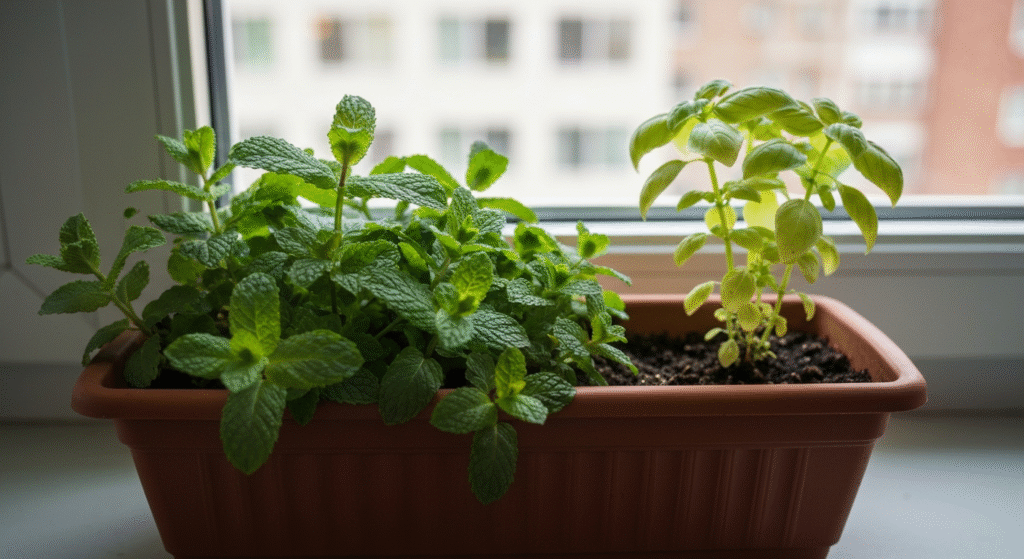
When I first decided to grow my own herbs, I had a romanticized vision of a single, lush window box overflowing with basil, parsley, and mint, all living in harmony. I bought a large rectangular planter, filled it with premium potting mix, and tucked my seedlings in side-by-side. It looked perfect on my apartment windowsill.
My name is Wissam Saddique, and if you read Trend Tales Park, you know I learn most things the hard way. That window box was one of my biggest early failures. Within about six weeks, the mint hadn’t just grown; it had launched a full-scale invasion. The basil was yellowing and stunted, and the parsley had practically vanished. I dug up the soil and found a thick, tangled mat of mint roots choking out everything else. That was the day I learned that mint is a bully. Through trial and error—and a lot of repotting—I’ve figured out exactly how to keep this aggressive grower in check without banishing it from my indoor garden entirely.
Here is how you can keep mint from destroying your other plants and managing its growth in a small space.
Understanding Why Mint is So Aggressive
To stop mint, you have to understand how it moves. Unlike basil or cilantro, which generally grow from a central stem and expand outward above ground, mint fights dirty. It uses rhizomes.
Rhizomes are underground stems that grow horizontally just below the soil surface. Think of them as subterranean runners. While you are looking at the pretty green leaves on top, the plant is sending these runners out in every direction, searching for new territory. Every inch or so along that runner, it can shoot up a new stem and put down new roots.
In my early experiments, I didn’t realize that what looked like a separate mint plant popping up three inches away was actually attached to the main mother plant underground. This root system is dense and fibrous. It consumes water and nutrients faster than almost any other culinary herb. When you put mint in a shared container, it starves its neighbors. It doesn’t mean to be malicious; it’s just genetically wired to colonize.
The Golden Rule: Separate Quarters
The most effective containment strategy is one I follow religiously now: Mint never shares a pot.
It is tempting to create those mixed herb bowls you see on Pinterest, but they are not sustainable for more than a month or two if mint is involved. I now keep my mint in its own dedicated container, completely physically separated from my rosemary, thyme, and basil.
Even if you leave plenty of space between plants in a large trough planter, the mint rhizomes will bridge the gap faster than you expect. I once tried using plastic dividers inside a large planter to section off the mint. The rhizomes actually grew down to the bottom of the divider, went under it, and popped up on the basil side. Nature finds a way.
If you want the look of a grouped herb garden, you can achieve this by keeping the mint in its own plastic nursery pot and sinking that pot into the larger soil volume of a shared planter. However, you have to watch it like a hawk (I will explain why in the maintenance section below), because the roots will eventually try to escape through the drainage holes.
Choosing the Right “Jail Cell” for Your Mint
Since we aren’t planting it in the ground or in shared bins, the specific pot you choose matters a lot. Through my testing of different setups in my apartment, I’ve found that size and material are the two variables that count.
The Minimum Size Requirement
Mint grows fast. If the pot is too small, the plant becomes root-bound (where the roots circle the pot endlessly) very quickly. When mint gets root-bound, it panics. It starts sending out distressed runners over the edge of the pot, looking for soil elsewhere.
I recommend a pot that is at least 8 to 10 inches in diameter. Anything smaller, like those cute 4-inch starter pots, will be overrun in weeks. You want enough soil volume to keep the plant happy so it doesn’t feel the immediate need to escape.
Material Matters
I prefer plastic or glazed ceramic pots for mint over unglazed terra cotta. Because mint is so thirsty, terra cotta (which wicks moisture away) can dry out too fast. If the soil gets too dry, the roots go into survival mode and grow more aggressively to find water. A plastic pot retains moisture better, keeping the rhizomes satisfied and slightly more contained.
The 3-Month Root Check
This is the part of the process most people skip, and it is where I messed up for a long time. You cannot just plant mint and forget it. Even in its own pot, mint will eventually strangle itself.
I have a recurring reminder on my phone every three months to check my mint roots. It sounds tedious, but it takes five minutes and saves the plant.
How to Trim Mint Roots:
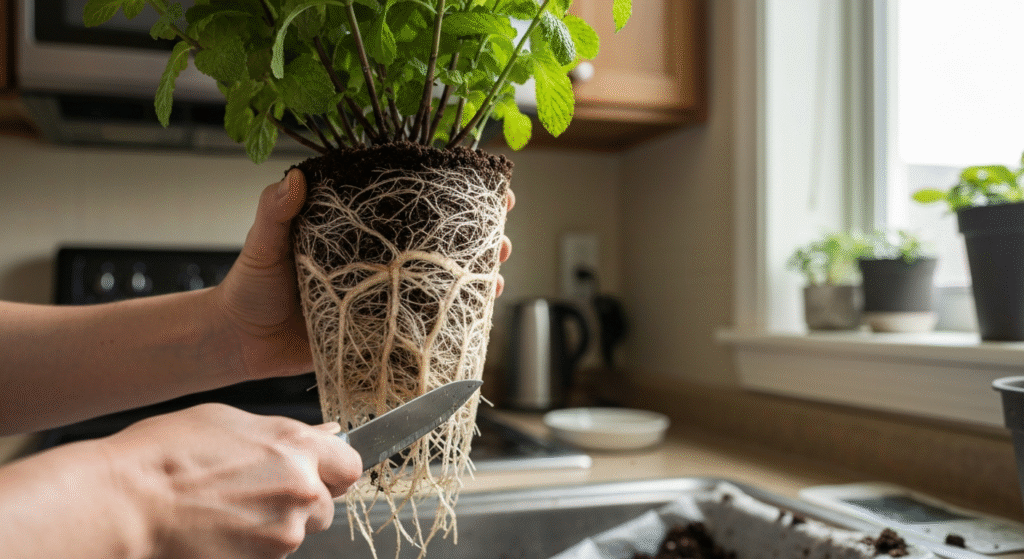
- Remove the Plant: I take the mint pot to my sink or a designated messy area. I squeeze the sides of the pot to loosen the root ball and slide the whole plant out.
- Inspect: usually, after three months, you will see a solid wall of white roots taking the shape of the pot. This means it’s time to operate.
- The Slice: I take a sharp, clean knife (a serrated bread knife works wonders for this) and I literally slice off the bottom inch of the root ball.
- The Quartering: If it is really dense, I will slice the root ball vertically into quarters and replant only one or two of the quarters with fresh soil.
- Repot: I put fresh potting mix in the bottom of the pot, place the trimmed root ball back in, and fill in the sides.
It feels brutal to cut away half of the plant’s roots, but mint is incredibly resilient. This mimics the natural die-back and regrowth it would experience in the wild. Within a few days, it bounces back with vigorous, leafy growth rather than leggy, woody stems.
Watching for “Jumpers”
One afternoon, I noticed something strange on my plant shelf. My mint pot was sitting next to my thyme pot. A long, purple-green stem had grown out of the mint pot, draped over the side, and was actually rooting itself into the soil of the thyme pot next door.
These surface runners are the mint’s secondary invasion tactic. If it can’t go underground, it goes over the top.
My Daily Scan Routine:
When I water or check the soil moisture, I look for horizontal stems reaching over the rim of the pot.
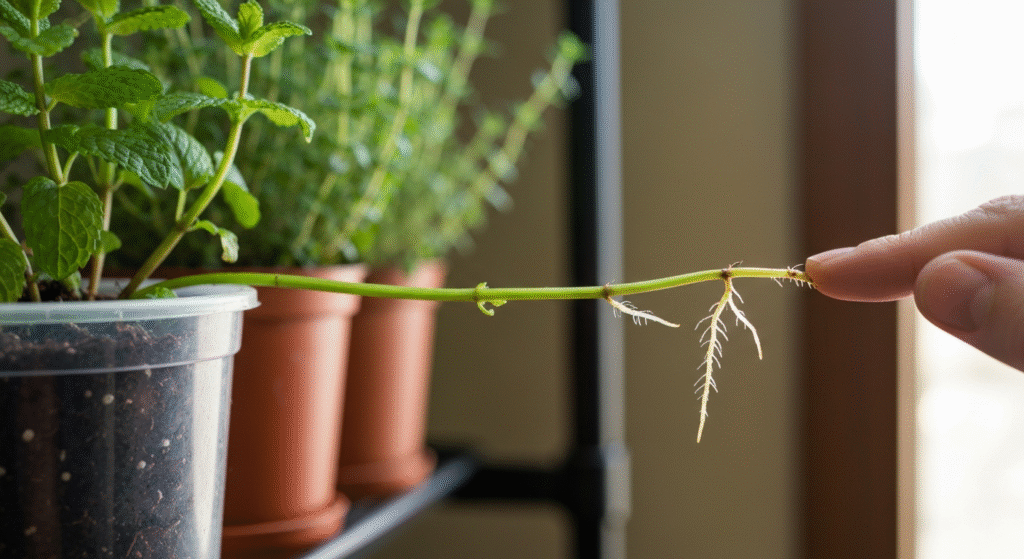
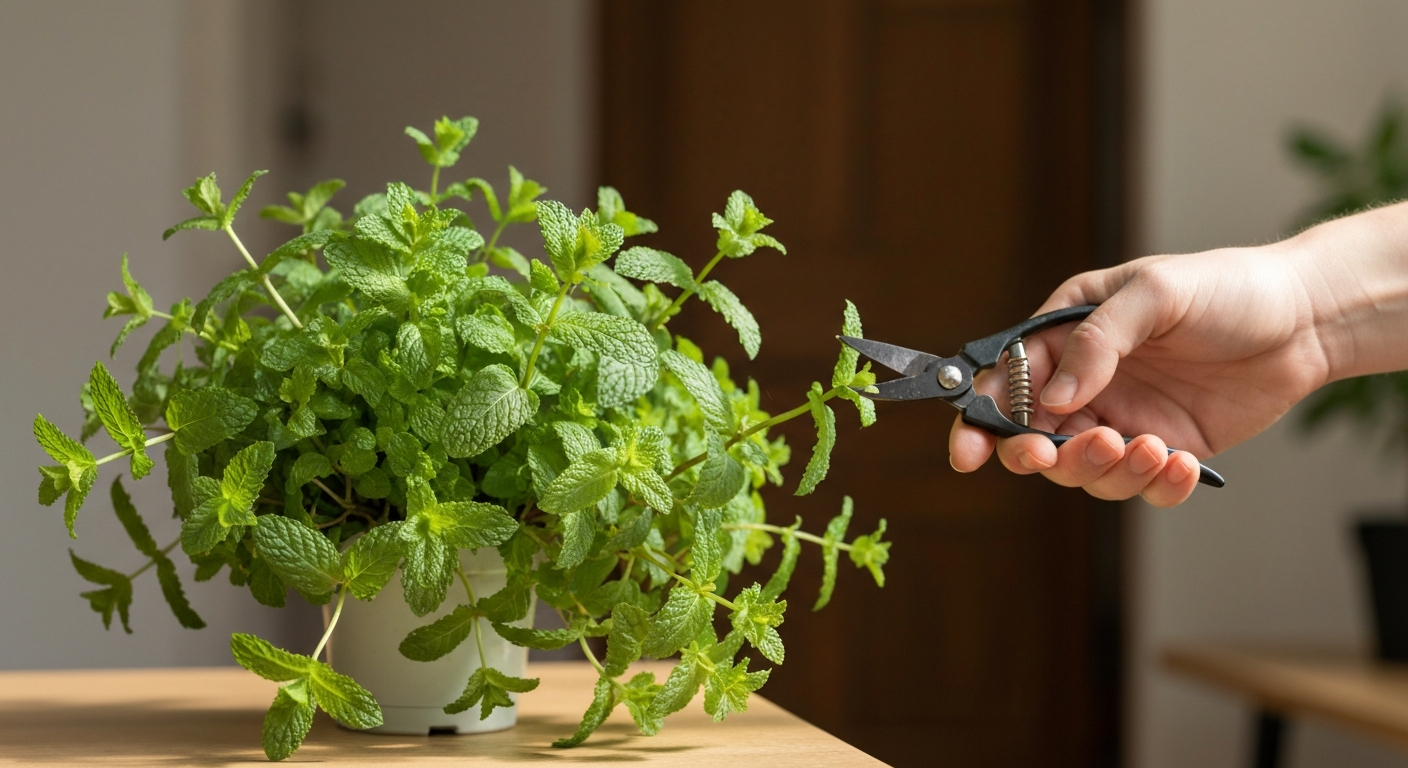
- The Fix: Snip them off immediately. Do not just tuck them back in. If a runner touches soil—any soil—it will root.
- Spacing: I now keep a physical gap of about two or three inches between my mint pot and any other herb pot. It acts as a demilitarized zone. If a runner tries to cross, it hits empty air, not soil.
Comparison: Mint vs. Other Common Herbs
It helps to visualize just how different mint is compared to the other plants you might have on your shelf. I made a quick comparison based on what I’ve seen when repotting my own collection.
| Feature | Mint | Basil | Rosemary |
| Root Style | Aggressive, horizontal rhizomes (web-like) | Central taproot with branching feeders | Woody, fibrous, slow-growing |
| Growth Rate | Extremely Fast | Moderate | Slow to Moderate |
| Containment | Mandatory isolation | Can share pots (with space) | Can share pots (prefers dry) |
| Pot Size Rec | 8-10 inches (min) | 6-8 inches | 6-8 inches |
| Main Threat | Choking out neighbors | Getting crowded out | Root rot from wet soil |
Recovering an Overrun Container
If you are reading this and thinking, “John, it’s too late, I already planted them together,” don’t worry. I have been there. You can fix it, but you need to act before the other herbs die completely.
I once had to rescue a rosemary plant that was being swallowed by chocolate mint. Here is how I handled the extraction:
- Dump Everything: Turn the entire planter out onto a tarp or newspaper. Do not try to dig the mint out while leaving the others; you will miss roots.
- The Untangling: Gently tease the soil away. You will likely see the thick, white mint roots woven through the finer roots of your other herbs.
- Surgical Separation: You might have to cut the mint roots to free the other plants. Prioritize saving the root systems of the non-mint herbs (like basil or thyme). The mint can take the damage; the others cannot.
- Quarantine: Pot the mint into its own container immediately.
- Rehabilitate: Replant the victim (the other herb) in fresh soil. It might look wilted for a few days due to root shock. Keep it out of direct blasting sun for a couple of days while it recovers.
Common Mistakes That Lead to Invasion
Over the last year or so of focusing on small-space gardening, I’ve noticed a few specific habits that lead to mint taking over. Avoiding these will save you a lot of dirt-covered frustration.
Mistake 1: Trusting “Containment” Methods Found Online
I’ve read hacks that suggest planting mint in a bottomless bucket buried in the ground or a pot with the bottom cut out. In an indoor container setting, this is useless. The roots just go down and out. Always use a pot with a bottom (and drainage holes, obviously).
Mistake 2: Reusing Contaminated Soil
If a pot previously had mint in it, do not plant parsley in that same soil without sterilizing or replacing it. Even a small one-inch piece of rhizome left behind in the dirt can regenerate into a full plant. I made this error once and was baffled why mint was growing in my cilantro pot. It was a zombie plant from leftover root fragments.
Mistake 3: ignoring the Rim
Some people plant the mint so the soil line is flush with the top of the pot. This makes it very easy for runners to spill over. I leave about an inch of space between the soil surface and the pot rim. It acts as a small barrier that keeps the water in and makes it slightly harder for runners to flop over the edge unnoticed.
Why This Effort is Worth It
It might sound like mint is a high-maintenance hassle, but the flavor of fresh mint is unbeatable. The goal isn’t to be afraid of the plant, but to respect its biology. Once I switched to the separate-pot method and started doing my quarterly root chops, my mint plants became productive members of my garden rather than destructive conquerors.
My basil is safe, my rosemary is happy, and I still get plenty of fresh leaves for tea. It just requires setting clear boundaries—literally.
For more detailed information on growing conditions for various herbs, I often refer to university extension guidelines, such as this helpful resource from Penn State Extension, which covers the general needs of indoor plants effectively.
Frequently Asked Questions
Can I plant different types of mint together in one pot?
You can, but I don’t recommend it. The more aggressive variety (usually Peppermint or Spearmint) will eventually choke out the weaker one (like Pineapple or Chocolate mint). Plus, their roots will tangle so badly that you will never be able to separate them later. They also tend to lose their distinct flavors if the roots are competing heavily.
Does mint kill other plants by releasing toxins?
No, mint isn’t allelopathic (meaning it doesn’t wage chemical warfare like black walnut trees). It kills other plants purely through physical domination. It steals all the water, hogs the nutrients, and fills every gap in the soil with its own roots, causing other plants to starve or suffocate.
How do I know if my mint is root-bound without taking it out of the pot?
There are signs. If water runs straight through the pot immediately without soaking in, the pot is likely full of roots. Also, if you see roots poking out of the drainage holes at the bottom or circling the surface of the soil, it is time for a trim.
Can I put a barrier in a rectangular planter to separate mint?
I have tried using plastic sheets and wood dividers, but they rarely work long-term. Water can seep between the barrier and the planter wall, carrying tiny roots with it. Or, the roots simply grow deep, go under the barrier, and come up the other side. Separate pots are the only fail-safe method.
Final Thoughts on Mint Management
Controlling mint comes down to vigilance. It is a plant that wants to survive and spread, and it is very good at it. But by giving it a dedicated 8 to 10-inch home, keeping it away from your other herbs, and being brave enough to slice those roots every few months, you can enjoy the harvest without the headache. Gardening in a small apartment is all about maximizing space, and keeping your mint contained is the best way to ensure every inch of your indoor garden stays healthy and productive.

