
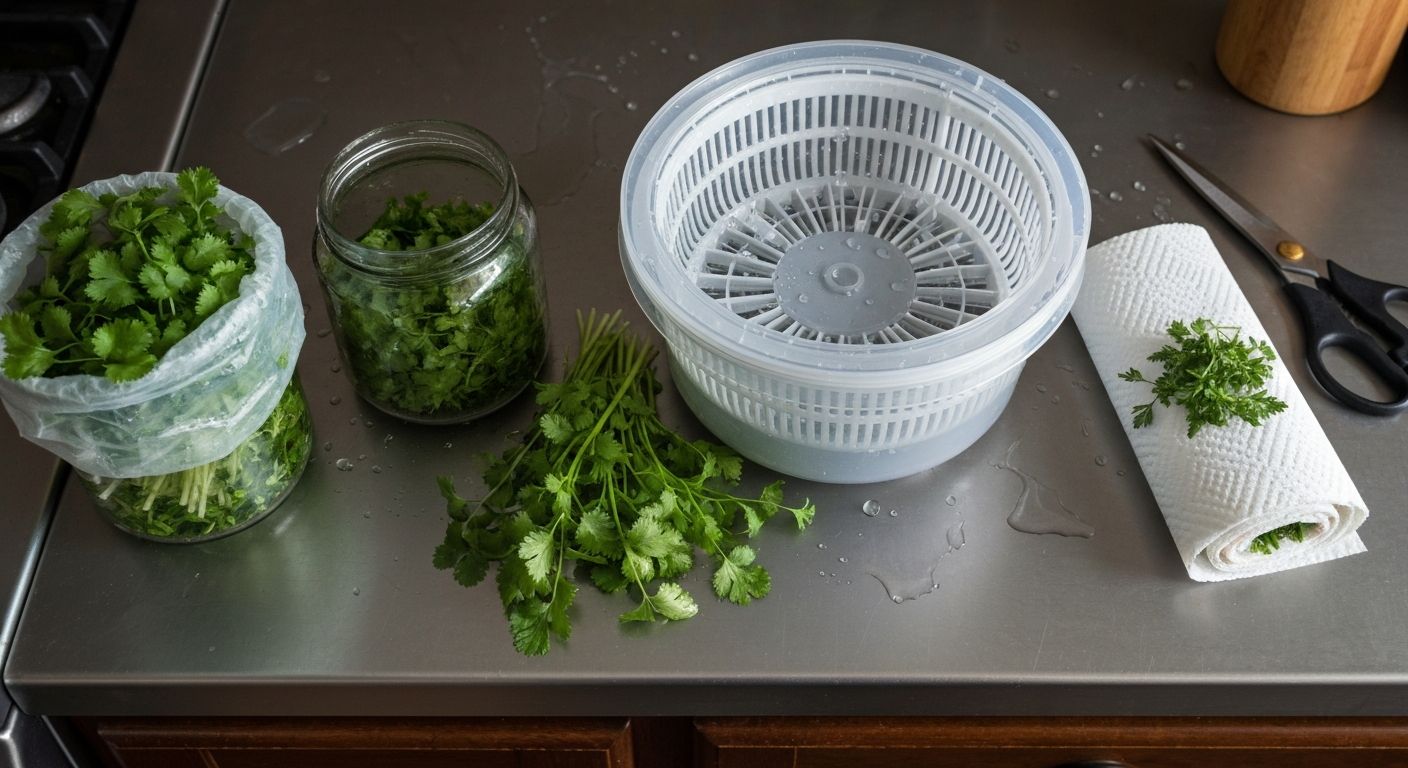
There is nothing more frustrating than buying a vibrant bunch of cilantro or harvesting your own hard-earned basil, only to find it turned into a slimy, brown mess in the vegetable crisper two days later. We have all been there. You plan a meal around fresh herbs, reach into the fridge, and pull out a bag of mush. It feels like a waste of money and, if you grew it yourself, a waste of time.
When I first started gardening in my small apartment, this happened to me constantly. I would carefully snip my herbs, toss them in a plastic bag, and hope for the best. Spoiler: the best never happened. Through trial and error—and throwing away more rotten parsley than I care to admit—I realized that different herbs have very different needs. Over the last year, I turned my kitchen into a bit of a testing lab. I experimented with glass jars, damp paper towels, fancy herb keepers, and different shelf placements to figure out what actually works.
The good news is that you don’t need expensive gadgets to keep your herbs crisp for a week or more. You just need to understand the balance between moisture and airflow. Below, I will walk you through the specific washing and storage methods I rely on to keep my cuttings fresh for 7 to 14 days.
Why Herbs Go Bad So Quickly
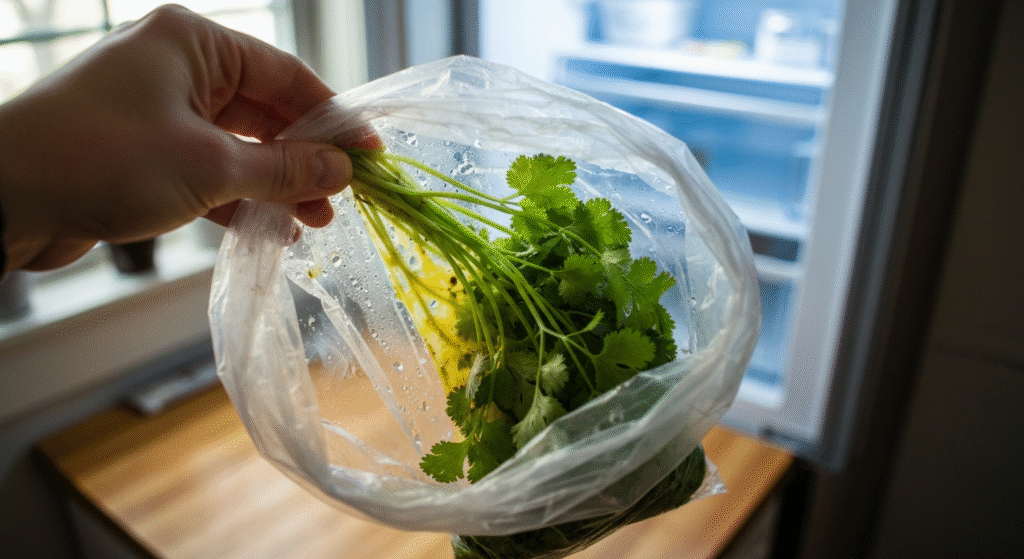
To solve the storage problem, we have to look at what is happening biologically. When you cut an herb, it doesn’t die immediately. It continues to breathe (respire) and lose water.
The two main enemies of fresh herbs are excess moisture and dehydration. It sounds contradictory, but here is what I found during my testing:
- Too much water on the leaves: This promotes bacterial growth and turns the leaves black and slimy. This usually happens when you wash herbs and don’t dry them enough before bagging them.
- Too little water in the stem: If the cut end dries out, the plant can’t pull up moisture to keep the leaves turgid, leading to wilting.
Most people make the mistake of suffocating their herbs in a sealed bag without enough moisture for the stems, or they drown the leaves. The goal of every method I use is to keep the stems hydrated while keeping the leaves dry and cool.
The Prep Work: Washing Without Bruising
I used to debate whether I should wash herbs right when I brought them inside or wait until I was ready to cook. My experience has shown me that washing them immediately is better for longevity, provided you dry them thoroughly. It removes bacteria and mold spores that might already be present on the leaves from the garden or the grocery store.
The Cool Water Swish
Never wash delicate herbs under a high-pressure kitchen faucet. The force of the water can bruise the leaves, especially tender ones like basil and cilantro. Bruised leaves release enzymes that speed up decay.
Instead, I fill a large mixing bowl with cool water. I emphasize cool—not ice cold, which can shock them, and definitely not warm. I submerge the herbs completely and gently swish them around with my hand. This loosens dirt, small insects, and grit, which settle at the bottom of the bowl.
For really dirty batches (like parsley after a rain), I might dump the water and repeat the process once more. I lift the herbs out of the water rather than pouring the water out with the herbs; this ensures the dirt stays at the bottom of the bowl.
Getting Them Bone Dry
This is the most critical step. If you store wet herbs, they will rot. Period.
I have tried drying herbs by laying them flat on kitchen towels, but I found it takes too long and the herbs often start to wilt before they are dry. The best tool for this is a salad spinner. It might seem bulky for a small handful of thyme, but the centrifugal force pulls water off the leaves without crushing them.
I spin them gently. If you don’t have a spinner, you can lay the herbs in a single layer on a clean, dry tea towel. Roll the towel up loosely with the herbs inside and gently press (do not squeeze). Unroll and let them air dry on the counter for another 10 minutes. You want the leaves to feel dry to the touch, not damp.
Storage Method 1: The Bouquet Method (Water Glass)
This is my go-to method for soft-stemmed herbs. It mimics how you would treat cut flowers. Through my testing, I found this method is non-negotiable for Basil, Cilantro, Parsley, and Mint.
How I Set This Up
- Trim the Ends: Just like flowers, I snip about half an inch off the bottom of the stems at a 45-degree angle. This opens up fresh capillaries for water uptake.
- Strip Lower Leaves: I remove any leaves that would sit below the water line. If leaves sit in the water, they rot quickly and foul the water, which kills the rest of the bunch.
- The Water: I fill a jar or a heavy drinking glass with an inch or two of cool water. You don’t need to fill it to the brim.
- The Cover (Crucial Step): This was the game-changer for me. I take a clean plastic bag (a Ziploc or even a produce bag) and loosely tent it over the leaves. I don’t seal it. This creates a humid microclimate that prevents the leaves from drying out in the dry air of your home or fridge.
The Basil Exception
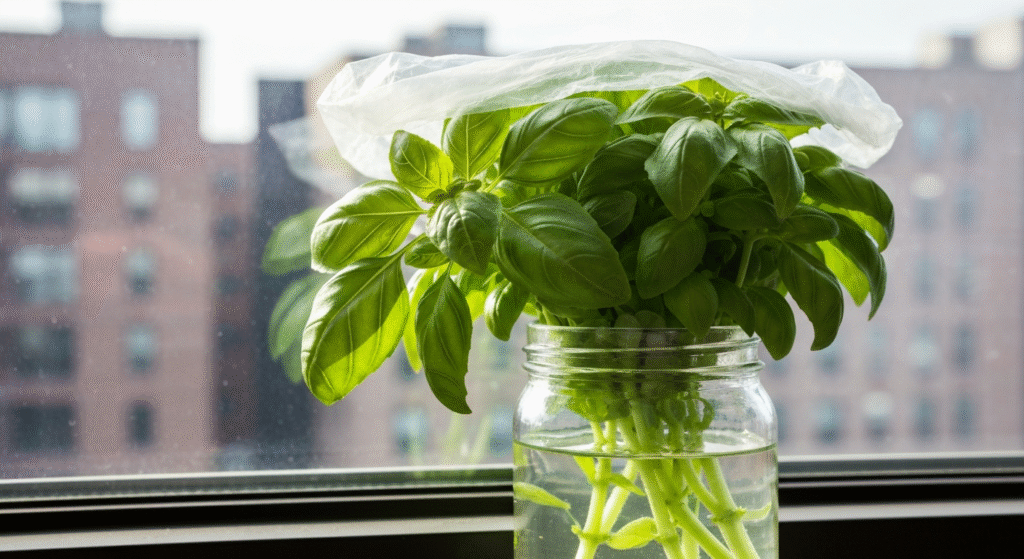
This is where many people fail. Never put Basil in the refrigerator.
I learned this the hard way after ruining three beautiful harvests in a row. Basil is a tropical plant. It is extremely sensitive to cold (anything below 50°F or 10°C). If you put damp basil in the fridge, the leaves will turn black within 24 hours.
For Basil, I use the bouquet method, but I leave the jar right on my kitchen counter, out of direct sunlight. It not only looks nice, but it also keeps the basil fresh for up to 10 days. For Cilantro, Parsley, and Mint, I use the exact same bouquet method (jar + water + bag tent), but I place the whole setup in the refrigerator.
Maintenance: I check the water every two days. If it looks slightly cloudy, I dump it and add fresh water. This simple act adds 3-4 days to the shelf life.
Storage Method 2: The Damp Paper Towel Roll
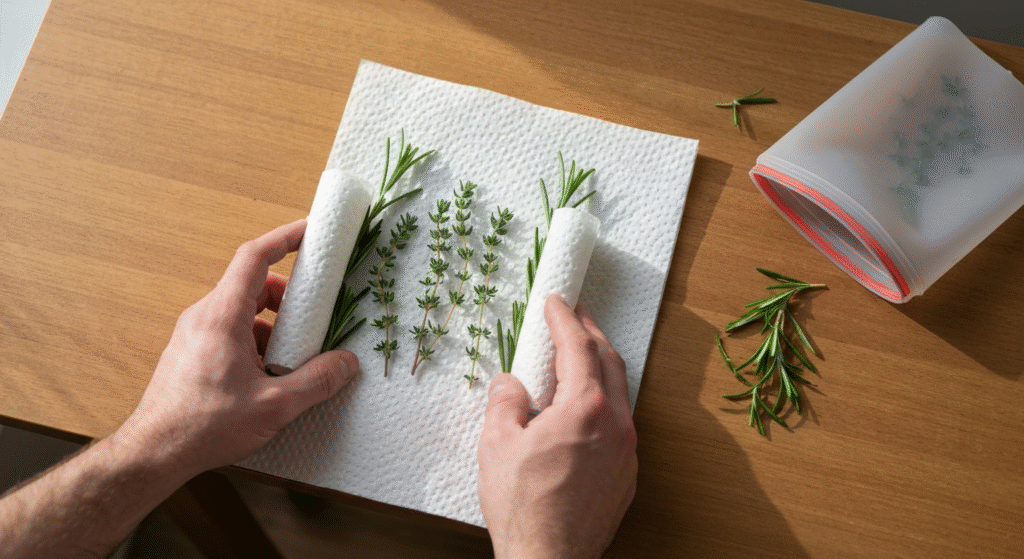
While the bouquet method works great for soft herbs, it is awkward for woody herbs or short sprigs. For Rosemary, Thyme, Oregano, Sage, and Chives, I use the “Paper Towel Roll” technique. These herbs generally have lower water content and are hardier, but they still dry out if left unprotected.
Finding the Right Dampness
The mistake I made early on was making the paper towel too wet. If the towel is dripping, you are inviting mold.
I run a single paper towel sheet under the tap and then wring it out as hard as I possibly can. I want it to feel barely damp, almost dry. Think of a sponge that you have squeezed all the water out of. That is the moisture level we are aiming for.
The Rolling Technique
I lay the herbs in a single layer on the damp paper towel. I try not to stack them too thickly because the ones in the middle might rot. Then, I roll the towel up loosely.
I place this roll inside a plastic zipper bag or a silicone reusable bag. I do not seal the bag completely. I leave about an inch open at the seal. This allows for a tiny bit of air exchange. If you seal it airtight, condensation builds up, and you get “herb soup.”
I store these bags in the warmest part of my fridge, usually the top shelf or the door, rather than the coldest spot in the back. Using this method, I have had Rosemary last for three weeks and Thyme for nearly two.
Comparing Herb Keepers vs. DIY Methods
When I started taking this seriously, I wondered if I needed to buy those dedicated “herb savor” pods you see in kitchen stores. They usually look like a tall plastic capsule with a water reservoir at the bottom. I bought one to test against my simple mason jar method.
Here is what I found after a side-by-side test with cilantro:
| Feature | DIY Mason Jar Method | Commercial Herb Keeper |
| Cost | Free (reused jar/bag) | $15 – $25 |
| Footprint | Can be bulky in the fridge | Slim, fits in fridge door |
| Ease of Use | Requires a loose bag | Hard shell protects leaves |
| Longevity | 12 Days (Cilantro) | 13 Days (Cilantro) |
| Visibility | Easy to see water level | Hard to see water level |
My Verdict: The commercial herb keepers do work. The hard shell prevents the herbs from getting crushed by a milk carton, which is a legitimate benefit in a crowded small-apartment fridge. However, purely in terms of freshness, they didn’t significantly outperform the jar-and-bag method. If you are on a budget, the jar works perfectly fine.
Troubleshooting Common Storage Issues
Even with the best methods, things can go wrong. Here is how I diagnose and fix problems when I open the fridge.
Yellowing Leaves
If your parsley or cilantro is turning yellow but isn’t slimy, it is usually natural aging or exposure to ethylene gas. Fruits like apples and bananas release ethylene, which ripens produce nearby.
- The Fix: Keep your herbs away from the fruit drawer. Also, pick off the yellow leaves immediately so they don’t trigger the rest of the bunch to turn.
Mold or Slime on Stems
This almost always means there is too much moisture.
- The Fix: If you catch it early, remove the slimy stems and throw them away. Take the remaining healthy herbs, wash them again, dry them thoroughly (use the salad spinner!), and repack them with a fresh, less-damp paper towel. If you are using the jar method, lower the water level so it isn’t touching any leaves.
Wilting Despite Water
If your herbs in the jar are wilting even though there is water in the glass, the cut ends of the stems might have “scabbed over.”
- The Fix: Take the herbs out, trim another quarter-inch off the bottom of the stems, and put them back in fresh water. This re-opens the drinking straw, so to speak.
Frequently Asked Questions (FAQs)
1. Can I wash the herbs right before I use them instead of before storage?
You can, but washing them before storage generally helps them last longer because you are removing bacteria and mold spores that accelerate decay. However, if you don’t have time to dry them 100% thoroughly, it is better to store them dirty and wash right before use. Storing wet herbs is the fastest way to ruin them.
2. How long can I realistically expect fresh herbs to last?
With the methods above, soft herbs like cilantro and basil usually last 7–10 days. Hardier herbs like rosemary and thyme can last 14–21 days. If your herbs are wilting in 2 days, check your moisture levels and fridge temperature.
3. What if I don’t use paper towels?
You can absolutely use a clean, thin cotton tea towel or flour sack cloth. The concept is the same: dampen it slightly and wrap the herbs. Just make sure the cloth isn’t thick and heavy, which might crush tender leaves.
4. Why do my herbs smell weird even if they look okay?
Sometimes the water in the jar goes stagnant before the herbs look bad. This happens if leaves fall into the water and rot. Change the water every 2-3 days to keep it fresh. If the stems smell swampy, trim the bottoms and change the water immediately.
For more details on the importance of handling fresh produce safely to prevent spoilage and foodborne illness, you can review the guidelines provided by the University of Minnesota Extension.
Final Thoughts on Keeping It Fresh
Learning to store herbs properly changed the way I cook. I used to avoid buying big bunches of parsley because I knew I would only use a garnish worth and throw the rest away. Now, I can keep a “bouquet” of parsley in my fridge for two weeks, snipping off what I need for eggs in the morning or pasta at night.
It doesn’t take a green thumb or fancy equipment. It just takes a little bit of care in how you wash, dry, and package them. Remember: treat the soft ones like flowers and the woody ones like delicate produce, and you will stop feeding your compost bin and start feeding yourself better meals.

