
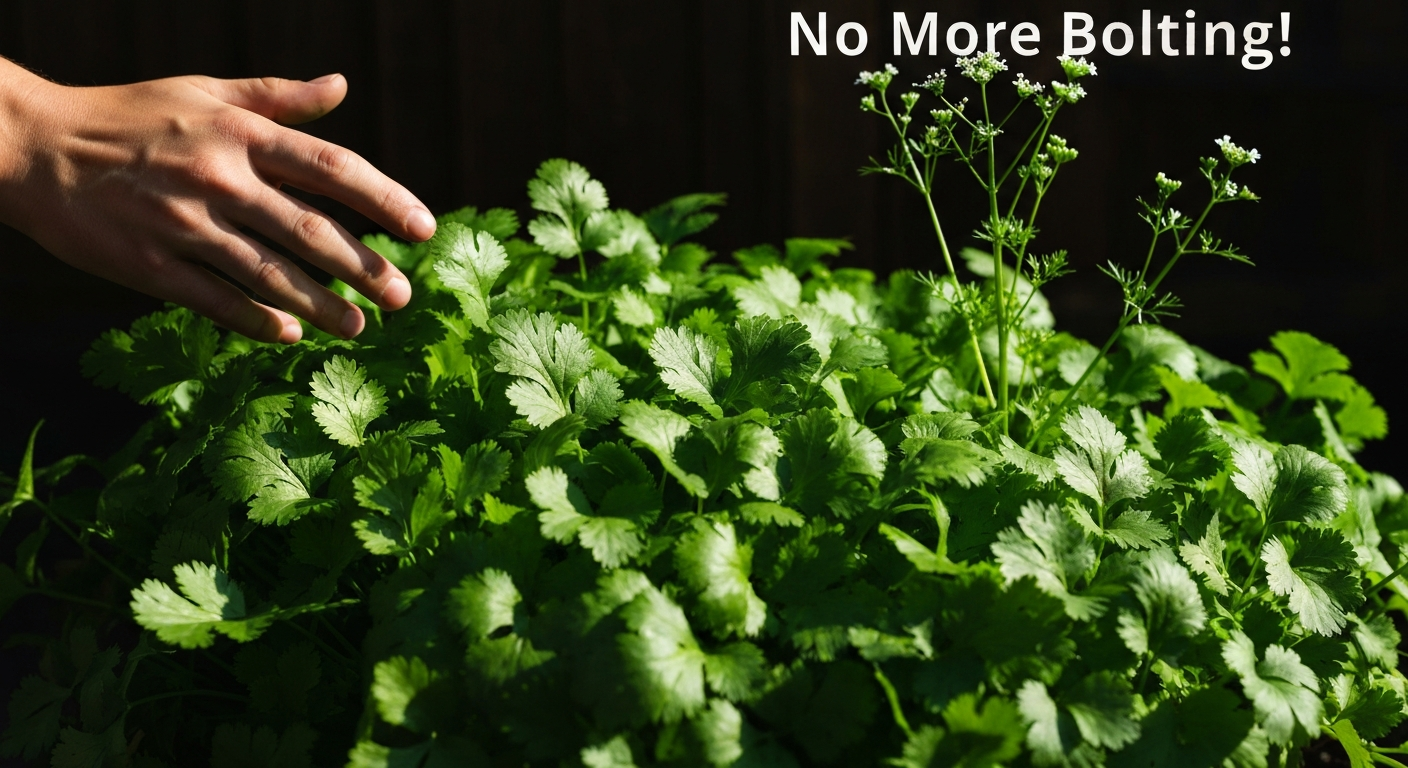
If you have ever bought a healthy-looking cilantro plant from the grocery store, brought it home to your apartment, and watched it turn into a tall, spindly stalk with white flowers within a week, you are not alone. It is the most frustrating part of indoor herb gardening.
I used to take it personally. I thought I had a “black thumb” or that I was just bad at watering.
My name is Wissam Saddique, and I run Trend Tales Park. I’ve spent the last 18 months growing cilantro continuously in my small apartment. I didn’t start as an expert; I started because I was tired of buying plastic clamshells of herbs that went slimy in the fridge before I could use them.
When I first tried growing cilantro on my windowsill, I failed repeatedly. I treated it exactly like my basil, and that was my mistake. Through a lot of trial and error—testing different spots in my kitchen, messing around with pot depths, and changing my watering routine—I realized that cilantro isn’t actually “difficult.” It’s just misunderstood.
The problem is almost always bolting.
This article isn’t a general gardening guide. I am not going to talk about aphids or how to dry herbs for storage. I am going to focus entirely on one thing: keeping your cilantro in the leafy, delicious stage for as long as possible. You cannot prevent bolting forever—it is a natural part of the plant’s life—but with the right adjustments, I found I could extend my harvest from a disappointing 3-4 weeks to a solid 8-10 weeks.
What Exactly Is Bolting?
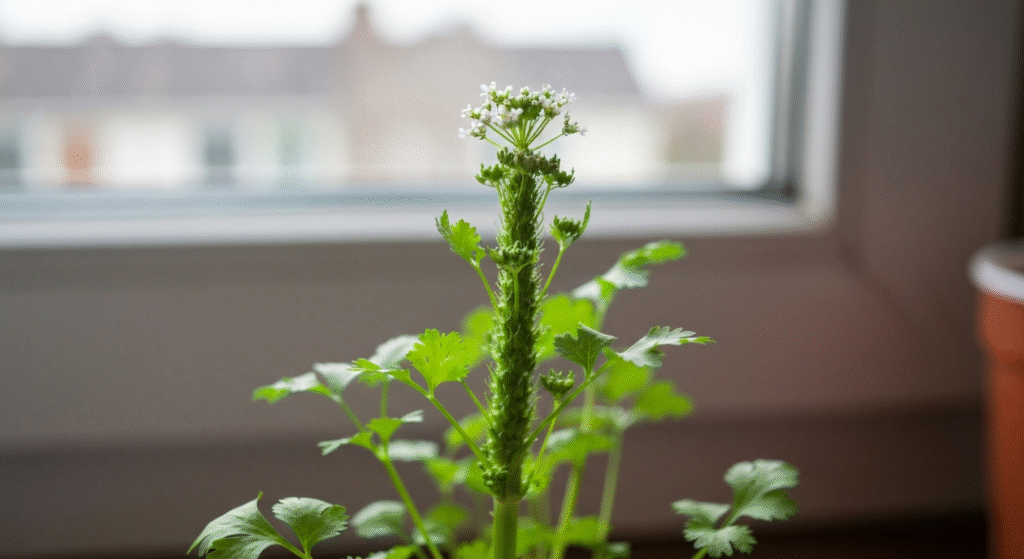
Before we fix the problem, we have to understand what the plant is doing. Bolting is simply the plant switching from “growing leaves” mode to “making seeds” mode.
When cilantro bolts, the stem gets thick and rigid. The leaves change shape, becoming feathery and thin (almost like carrot tops). Eventually, white or pinkish flowers appear. Once this starts, the flavor profile changes immediately. The leaves lose that fresh, citrusy punch and start tasting bitter or metallic.
Why It Happens
Biologically, bolting is a survival mechanism. When a cilantro plant feels stress, it panics. It thinks, “I am going to die soon, so I better reproduce right now.” It stops putting energy into leaves and pushes all its energy into making flowers and seeds to ensure the next generation survives.
Outdoors, this usually happens when summer heat hits. Indoors, we often accidentally trick the plant into thinking it’s dying by giving it the wrong environment.
The Temperature Trigger: The #1 Culprit
If you take only one thing away from my experience, let it be this: Cilantro hates heat.
This was my biggest hurdle. I live in a small apartment that stays pretty cozy. I assumed all herbs loved warm, sunny windowsills. Basil does. Oregano does. Cilantro does not.
Cilantro is a cool-season crop. It thrives in temperatures between 60°F and 68°F (15°C – 20°C).
When the temperature around the plant creeps above 75°F, the plant initiates the bolting process. In my early attempts, I had my pots sitting on a south-facing window ledge. The glass magnified the sun, and even though my thermostat said 72°F, the air right next to the window was likely hitting 80°F or higher during the day.
My “Cool Spot” Strategy
I had to get creative to find a micro-climate in my apartment that worked. Here is what I learned about temperature management:
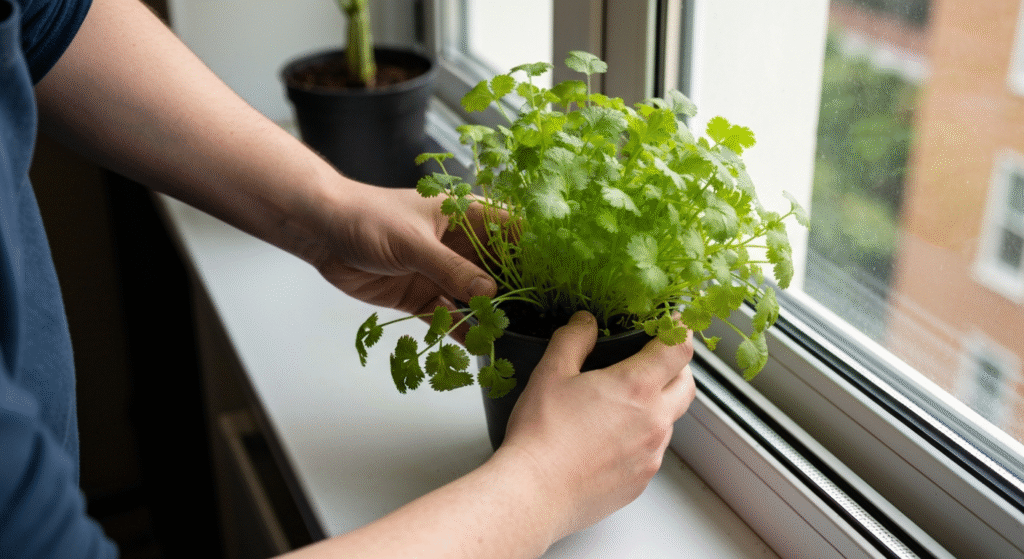
- Avoid Heat Sources: Never place cilantro near a radiator, a heating vent, or on top of the refrigerator (which gives off heat).
- Lower is Better: Heat rises. I moved my cilantro from a high shelf to a lower plant stand. The temperature difference of just a few feet can be 2-3 degrees, which matters.
- The Window Gap: If you grow on a windowsill, touch the glass during the day. If it feels hot, it’s too hot for cilantro. I pulled my containers back about six inches from the glass to keep them out of the direct “baking” zone.
| Temperature Range | Cilantro Reaction | Outcome |
| 60°F – 68°F | Happy, relaxed growth. | Lush leaves, harvest lasts 8-10 weeks. |
| 70°F – 75°F | Mild stress. | Growth slows, flavor is okay, bolts in 5-6 weeks. |
| 76°F and up | Panic mode (Bolting). | Stalk shoots up, leaves turn bitter, flowers in 3-4 weeks. |
Lighting: The Delicate Balance
This is where things get tricky. Cilantro needs light to grow, but light often brings heat. It is a balancing act.
In my first few months, I thought, “More light is better.” I put my plants under a strong grow light for 16 hours a day. They bolted in record time. The intensity was just too much for them alongside the ambient heat.
The Sunlight Misconception
Direct, scorching sunlight is often too intense for indoor cilantro unless your room is very cool. East-facing windows are often better than South or West-facing windows. East windows get the gentle morning sun but avoid the harsh afternoon heat.
If you are using grow lights, as I do during the darker winter months, you don’t need the high-intensity setting you might use for fruiting plants like tomatoes.
- Duration: I reduced my light timer to about 10-12 hours a day rather than 16.
- Distance: I keep LED lights about 6-10 inches above the canopy. LEDs are great because they don’t emit much heat, unlike older bulbs.
If you see the plant stretching or “reaching” (getting tall and thin without many leaves), it needs more light. But if it is short, stocky, and flowering early, it likely has too much heat intensity.
Root Stress: The Hidden Cause of Bolting
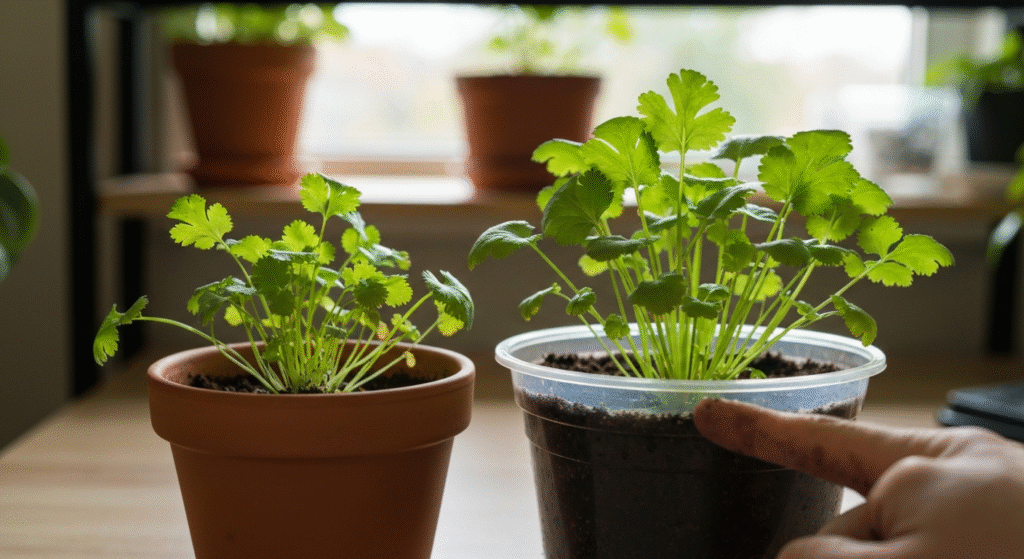
This was the factor I ignored for the longest time. I was using those cute, tiny 4-inch pots because they fit on my narrow sill.
Cilantro has a taproot. This means it sends one main root deep down into the soil, rather than just spreading out sideways. When that taproot hits the bottom of a small pot, the plant gets a signal: “We are out of space.”
This root restriction causes stress. Remember, stress equals bolting.
Why Pot Depth Matters
When I switched from small nursery pots to deeper containers, the lifespan of my cilantro almost doubled immediately.
- The 4-Inch Mistake: In a shallow pot, the soil dries out faster and the roots cramp up. The plant feels unstable and rushes to seed.
- The Minimum Depth: I now use pots that are at least 8 to 10 inches deep. Even if the pot isn’t very wide, that depth allows the taproot to stretch out.
I prefer using glazed ceramic or plastic pots rather than unglazed terracotta for cilantro. Terracotta breathes well, which is great for rosemary or thyme that like to dry out. But for cilantro, terracotta dries out too fast, leading to the next major stressor: moisture fluctuation.
Watering Consistency: Don’t Let It Thirst
I admit I am guilty of forgetting to water my plants until they droop. Basil is dramatic—it wilts and then perks right back up when you water it. Cilantro is less forgiving.
If you let cilantro soil dry out completely to the point where the leaves go limp, you have just triggered the bolting alarm. The plant interprets drought as the end of the growing season. Even if you water it and it looks like it recovered, the chemical signal to flower has often already been sent.
My Watering Routine
I stopped watering on a schedule (like “every Monday”) and started watering based on touch.
- The Finger Test: I stick my finger about an inch into the soil.
- The Goal: I want it to feel like a wrung-out sponge. Moist, but not soggy.
- Consistency: The key is keeping the moisture level steady. I check my cilantro every two days. In the winter, with the heater running, the air is drier, so the soil loses moisture faster than you might think.
Mulching can help here. I sometimes put a thin layer of vermiculite or even small pebbles on top of the soil. This keeps the moisture from evaporating into the dry apartment air, keeping the roots cool and hydrated.
Selecting the Right Seeds
If you are grabbing a generic packet of seeds labeled just “Cilantro” from the dollar store, you are starting with a disadvantage.
Genetic selection is a powerful tool. Plant breeders have developed specific varieties that are “slow-bolt” or “bolt-resistant.” These plants are genetically programmed to withstand heat a little longer before triggering the flowering process.
Varieties I Have Tested
I spent a season comparing generic seeds against specific named varieties. The difference was noticeable.
- Calypso: This is my current favorite. It is incredibly slow to bolt. In my tests, it gave me an extra two weeks of harvest compared to the standard variety.
- Santo: Another solid performer. It has good flavor and stands up well to slightly warmer kitchen temperatures.
- Cruiser: This one grows very upright and is quite vigorous.
When you buy seeds or starter plants, look specifically for the words “slow bolt” on the label. It is not a marketing gimmick; it is a genetic trait that helps indoor growers significantly.
The Harvest Strategy
How you cut the plant also dictates how long it lives. I used to just chop off the top leaves when I needed them for tacos.
If you cut the central stem (the main growing tip) too early, you stop the vertical growth, which sounds good, right? But often, the plant reacts by sending up side shoots that mature and flower quickly.
The “Cut and Come Again” Method
I treat my cilantro gently.
- Outer Leaves First: I harvest the larger, outer leaves at the base of the plant first. This allows the center of the plant to keep growing new leaves.
- Don’t Scalp It: I never take more than 30% of the leaves at one time. If you take too much, the plant gets stressed (again, stress = bolting).
- Regular Harvesting: weirdly enough, harvesting regularly keeps the plant in “growth mode.” If you leave the leaves too long, the plant matures and decides it is time to flower. It’s a rhythm—you have to use it to keep it growing.
My “Anti-Bolt” Checklist
After 18 months of tweaking my setup, this is the routine that works for my apartment. It helps me manage the environment without buying expensive equipment.
- Location: The plant sits on a stand near an East-facing window, but not on the sill. It is away from the kitchen stove and the radiator.
- Pot: I use a plastic pot that is 8 inches deep to accommodate the taproot and retain moisture.
- Soil: I use a premium potting mix with a little extra perlite to ensure it doesn’t get waterlogged, but the plastic pot keeps it from drying out instantly.
- Variety: I only sow “Calypso” or “Santo” seeds now.
- Temperature Check: If my apartment feels hot to me (t-shirt weather), I know my cilantro is suffering. I might move it to a cooler spot on the floor for the hottest part of the afternoon.
When It Bolts Anyway
Here is the reality check: Cilantro is an annual plant with a short lifespan. No matter how perfect your setup is, it will eventually bolt. It is not immortal.
My goal is never to keep a single plant alive forever. My goal is to keep it leafy for 8 or 10 weeks instead of 4.
When you see that thick center stalk shooting up and the leaves getting thin:
- Acceptance: The leafy harvest is over. The flavor is changing.
- Eat the Flowers: The white flowers are actually edible! They have a strong cilantro flavor and look great as a garnish on salads or curries.
- Let it Ride: If you have space, let the seeds form. Those seeds are coriander. Green (fresh) coriander seeds are a flavor explosion that you can’t buy in stores—they taste like a mix of cilantro and citrus. Brown (dried) coriander is the spice you use in baking and curries.
Succession Planting: The Real Secret
Because we can’t stop bolting forever, the only way to have a constant supply of cilantro is succession planting.
I don’t plant one big pot and hope it lasts all year. I plant a new small batch of seeds every 3 to 4 weeks.
- Pot A: Ready to harvest.
- Pot B: Just sprouting.
- Pot C: Seeds just went in the soil.
When Pot A finally bolts, I compost it, and Pot B is ready to take over. This rotation is the only way I have found to truly always have fresh cilantro on hand in a small space. It stops the anxiety of trying to “save” an old plant that just wants to go to seed.
FAQs About Cilantro Bolting
Q: Can I cut the flower stalk off to stop bolting?
A: You can try, but it is usually a losing battle. Once the stalk appears, the plant has already changed its chemistry. Cutting the flower might buy you a few more days, but the leaves will likely already taste bitter. It is better to start a new plant.
Q: Does fertilizer make cilantro bolt?
A: High-nitrogen fertilizer can actually help delay bolting by encouraging leaf growth. However, if you use a fertilizer high in phosphorus (the “bloom” nutrient), you might encourage flowers. I use a balanced liquid fertilizer at half-strength every few weeks.
Q: Why does my cilantro fall over?
A: If it is falling over, it is likely “leggy,” meaning it is stretching for light. While we want to avoid heat, the plant still needs sufficient light intensity to hold itself up. Move it closer to the light source or add a small fan to strengthen the stems.
Q: Can I grow cilantro from the cuttings I buy at the supermarket?
A: generally, no. Cilantro does not root well from cuttings like basil or mint does. It relies on that taproot we discussed earlier. It is much faster and more reliable to grow it from seed.
Final Thoughts
Growing cilantro indoors is a bit of a dance. It forces you to pay attention to the micro-climate of your home. It taught me that plants have their own agenda, and sometimes that agenda is just to make seeds as fast as possible.
Don’t be discouraged if your first batch bolts. It happened to me, and it happens to every gardener I know. Check your temperature, get a deeper pot, and keep the soil consistently moist. Once you find that “sweet spot” in your home where the air is cool and the light is bright, you will be rewarded with the best taco toppings you have ever tasted.
For more detailed information on general indoor herb care and setting up your space, the University of Minnesota Extension offers excellent guidance on lighting and temperature requirements for various herbs.

